
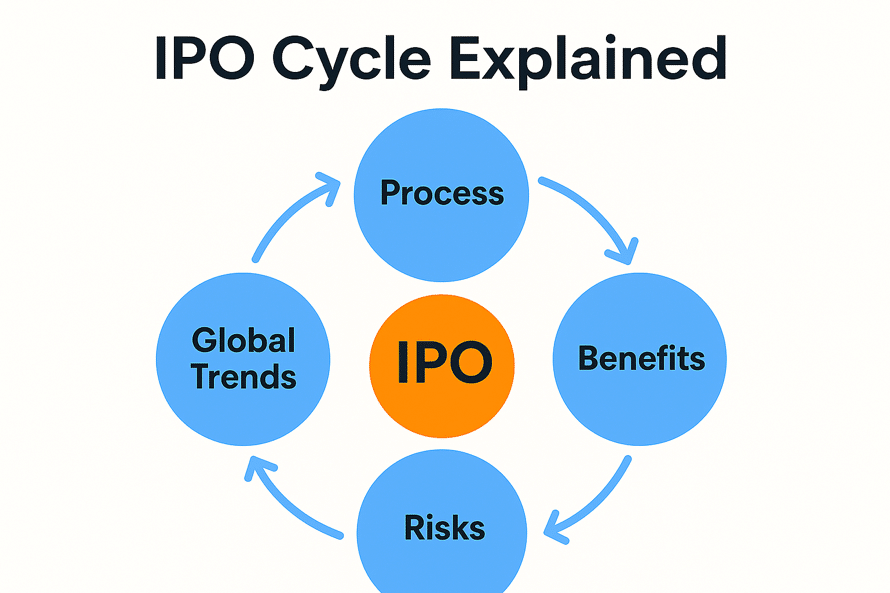
Going public is one of the biggest steps a company can take in its growth journey. For investors, an Initial Public Offering represents a chance to invest in a business at the beginning of its public market life. To understand how companies reach this stage, it is essential to explore the IPO cycle, a structured sequence of steps that guides a private business from planning to its first day of trading. Each stage involves compliance, valuation, marketing, and monitoring of external factors such as the dollar index, which can influence investor behaviour and market demand.
What Is the IPO Cycle?
The IPO cycle refers to the process a private company follows to become publicly traded on a stock exchange. The cycle covers everything from internal preparation to the actual listing of shares. It helps establish transparency, builds investor confidence, and sets the foundation for a successful market debut. The main stages of the IPO cycle include pre-IPO preparation, filing with regulators, roadshows, pricing, and the final listing. Throughout these stages, economic factors like the dollar index can shape investor appetite and the overall market environment.
Pre-IPO Preparation
The first phase of the IPO cycle involves evaluating whether the company is ready to go public. This step requires detailed financial planning, restructuring, and selecting the right advisors.
Companies often revise their governance policies, streamline operations, and improve compliance standards. Advisors such as investment bankers and legal experts assist with valuation, due diligence, and drafting the prospectus. This document outlines the company’s strengths, risks, and financials for potential investors. During this period, monitoring global indicators like the dollar index is important, as fluctuations can influence international investor participation and expected valuations.
Filing With the Regulatory Body
After the preparation phase, the company files its registration documents with the regulatory authority. This filing contains all essential business and financial information required for review.
Regulators assess whether the disclosures are accurate and complete. They may request revisions, which the company must address before receiving approval. This step brings the company closer to listing, but it also highlights the need for transparency. The dollar index can impact sentiment at this stage because significant movements may raise concerns for companies with foreign exposure or currency-dependent revenue streams.
Roadshows and Marketing
Once the filing is approved, the company and its underwriters begin marketing the IPO through roadshows. This is a key stage in the IPO cycle because it helps generate investor interest and demand.
Roadshows include presentations, virtual sessions, and meetings with institutional investors. These investors often receive priority in IPO allocations, making their feedback crucial for determining price expectations. Broader economic conditions, including the strength or weakness of the dollar index, can shape investor confidence during this stage. For example, a weak dollar index may boost export-driven businesses, improving their attractiveness.
Pricing and Allocation
The next phase focuses on deciding the final IPO price. This step relies on information gathered during roadshows, market sentiment, and the company’s financial outlook.
Setting the right price is essential. Pricing too high may limit demand, while pricing too low could reduce the capital raised. The dollar index often influences this phase indirectly. A stable or rising dollar index generally signals stronger market conditions, potentially leading to healthier pricing, whereas a falling dollar index may indicate uncertainty and cautious investor behaviour.
Listing on the Stock Exchange
The final step in the IPO cycle is the listing of shares on the stock exchange. On listing day, the market determines the opening price based on demand and supply.
A strong listing indicates positive sentiment, while a weak debut may reflect market caution. After listing, the stock’s performance is shaped by financial results, market dynamics, and global indicators. Companies with international operations may be affected by movements in the dollar index, as currency fluctuations can influence profitability and valuations.
The Role of External Factors in the IPO Cycle
The IPO cycle is influenced by several external elements such as global markets, interest rates, geopolitical developments, and currency strength. Among these, the dollar index plays a crucial role by affecting international capital flows and investor sentiment. A strong dollar index can attract foreign investment, while a weak trend may reduce global liquidity and impact demand for new public offerings. Companies planning to go public closely track these indicators to time their IPO effectively.
Conclusion
The IPO cycle is a comprehensive process that requires strategic planning, regulatory compliance, and effective communication with investors. From initial preparation to listing day, each stage plays a vital role in shaping the success of an IPO. External economic factors, especially the dollar index, add another layer of complexity by influencing investor confidence and market conditions. For companies, understanding the full IPO cycle ensures smoother execution, while for investors, it provides clarity for making informed decisions. As financial markets evolve, staying aware of these interconnected factors becomes essential for both sides of the IPO journey.
