
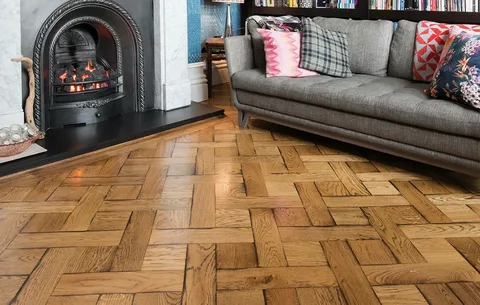
Dubai’s climate is famously extreme: long, blazing summers and very dry air are normal, while indoor spaces are often kept cool and dry thanks to powerful air conditioning. These swings in temperature and humidity put a lot of stress on wood. If the wood species isn’t stable, your parquet could warp, shrink, or develop gaps. Because of this, choosing wood for parquet in Dubai is not just about style — it’s about durability in a very challenging environment.
Why Engineered Wood Often Makes More Sense in Dubai
In a climate like Dubai’s, engineered wood is often the smarter choice compared to solid wood. Engineered wood is made up of a thin layer of real hardwood on top, backed by core layers of plywood or high-density material. This multi-layer construction gives the flooring more dimensional stability — meaning it resists the expansion and contraction caused by heat and humidity. As many local flooring specialists point out, engineered parquet flooring is more suited to the climate, and it provides the beauty of natural wood without the same risks.
Choosing the Right Wood Species for Parquet
When you think about the species of wood for parquet, it’s important to balance natural beauty with how well the wood will perform in Dubai’s conditions. Here are some of the best wood species commonly used for parquet here, and what makes each of them a good (or less ideal) choice.
Oak: The Timeless Classic
Oak is one of the most popular choices for parquet because it is strong, reliable, and visually versatile. Its grain is attractive but not overly busy, and it can be finished in many ways to match different styles. Because oak is both durable and widely available, it is often used in engineered parquet, giving that classic look while being more stable for Dubai’s variable climate.
Maple: Light, Clean, and Durable
Maple has a light, creamy appearance and a very fine, even grain. It’s also quite hard, which makes it good for areas that get a fair amount of foot traffic. In an engineered parquet, maple brings a modern, clean feel to a room, and its hardness helps it resist dents and wear — something to value in a hot, dry place where maintenance should be efficient.
Walnut: Rich and Elegant
Walnut offers a deep, warm tone, often leaning toward chocolate or coffee brown. Its grain is more dramatic, giving a luxury feel. Although walnut is not as hard as oak or maple, when used in engineered parquet, it still offers good stability. Its rich color and distinctive aesthetics make it a favorite in more upscale interiors or rooms where design is a priority.
Teak: Built for Moisture and Heat
Teak is a tropical hardwood well-known for its natural oils, which help it resist moisture, insects, and drying out. These oils make teak more dimensionally stable in humid or variable environments, and that stability is a big advantage in a place like Dubai, where temperature and humidity can be extreme inside buildings. Its golden-brown tones and fine grain add a luxurious and warm feel, making it very attractive for high-end parquet flooring.
Beech and Other Woods: Pros and Things to Watch For
Beech is another option: it is smooth and has a warm color, but it can be more sensitive to humidity changes compared to oak. For more exotic or tropical-style woods, there are options like acacias, certain rosewoods, or plantation-grown hardwoods, which sometimes perform better in environments that see a lot of change. But with such woods, you must ensure they are properly dried and engineered to avoid future issues.
Balancing Looks and Practicality
When selecting a wood species, think of it as a balance between how you want your floor to look and how it will perform. If your priority is a timeless, traditional aesthetic, oak or walnut are excellent choices. If you lean more toward a bright, clean, contemporary style, maple might be your go-to. On the other hand, if you want a durable, climate-resistant floor that handles heat and humidity well, teak or tropical woods become very attractive. And by choosing engineered versions of those species, you get the visual beauty of real wood combined with extra resilience — much like the stability and versatility you find in LVT Flooring Dubai which offers a stylish, water-resistant, and practical alternative to natural materials.
The Role of Proper Installation
Choosing the right species is just part of the equation — how you install the parquet matters a lot. First, the wood needs to acclimate: before installation, the wood planks should sit in the room for a couple of days so they can adjust to the local temperature and humidity. That way, they are less likely to move dramatically after installation. Installers should leave expansion gaps around walls so the wood has some room to breathe. Using professional parquet installers who understand the patterns (like herringbone or chevron) and know how to account for movement will make a big difference in the floor’s long-term performance.
Caring for Your Parquet in Dubai
A well-chosen wood species still needs the right care. Clean parquet with a damp mop, not a wet one — too much water is risky. Try to keep indoor humidity relatively stable: while Dubai is hot, your air-conditioning system can help regulate moisture. Avoid letting water sit on the floor. Regularly inspect for any signs of movement, such as gaps or slight lifts, and address these early before they become serious.
Thinking Long-Term: Value and Sustainability
When picking wood, also think about how sustainable the source is. Ask your supplier whether the wood is from well-managed forests or certified sources. Exotic woods like teak may cost more up front, but their natural stability can make them a smart investment in Dubai’s climate. Alternatively, engineered oak or walnut combines good aesthetics with cost-effectiveness and greater durability.
Final Thoughts
In Dubai, choosing parquet flooring means more than just picking a beautiful wood. Because of the city’s intense heat and sometimes changing humidity, you need wood that looks good and stands up to environmental stress. Engineered wood is often the best structural choice, and species like oak, maple, walnut, and teak each bring something valuable. By balancing aesthetics, practicality, proper installation, and maintenance, you can have a parquet floor that not only enhances your space but also endures for years.
If you like, I can write a short buyer’s guide (with local UAE-specific tips) to help someone pick parquet wood species for their Dubai home — do you want me to do that?
