
A boiler sits at the center of comfort in many homes, supplying heat and hot water throughout the year. Whether an ageing unit is failing or a property upgrade is planned, understanding the process reduces uncertainty and builds confidence. A well-managed boiler project follows a clear sequence, guided by safety rules, engineering standards, and household needs. During the early planning stage, Boiler Installation is often discussed alongside system condition, fuel type, and long-term reliability, making informed preparation essential.
This guide explains each stage in detail, offering clarity on timelines, responsibilities, and professional expectations.
What signs suggest a boiler replacement is necessary?
Older boilers often show patterns of decline rather than sudden failure. Repeated breakdowns, rising energy bills, uneven heating, or unusual noises often indicate internal wear. Spare parts for discontinued models may become difficult to source, increasing repair costs and downtime.
Another factor relates to efficiency standards. Modern boilers operate with improved fuel use and emission control. A replacement may suit properties where energy performance certificates require improvement or where household demand has increased due to extensions or occupancy changes.
What happens during the initial boiler assessment?
A qualified heating engineer begins with a detailed survey. This review covers the existing boiler, pipework, radiators, controls, and flue positioning. Gas supply pressure, ventilation routes, and condensate drainage are also checked.
Room size, insulation quality, and hot water usage patterns guide boiler sizing. Oversized units waste fuel, while undersized systems struggle to maintain comfort. Engineers also confirm compliance with building regulations and gas safety law, which protects occupants and property.
Which boiler type is usually recommended?
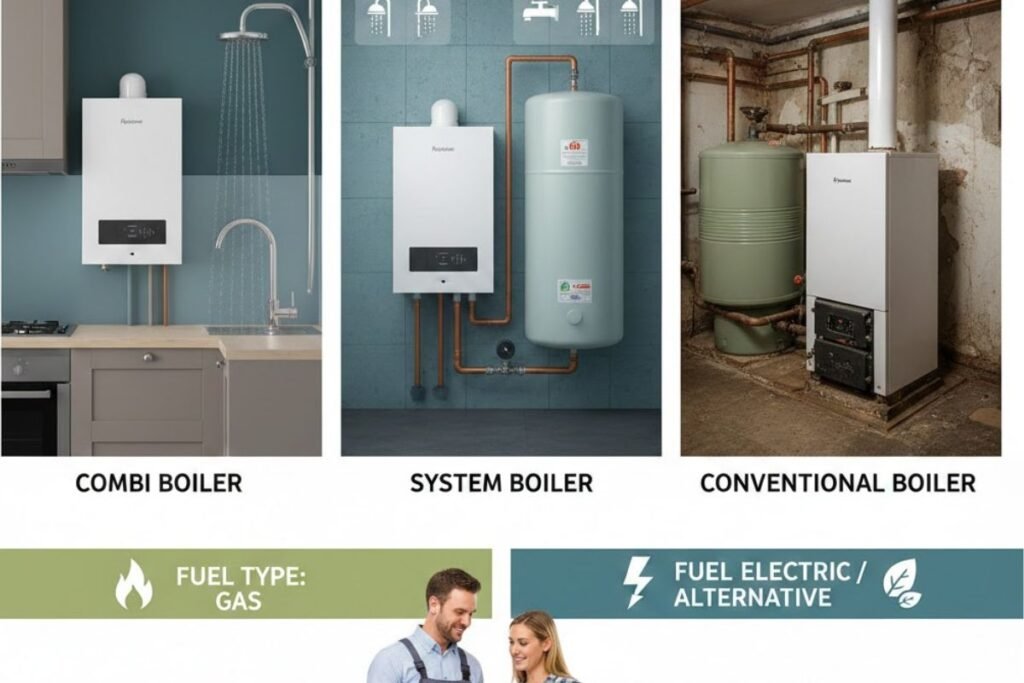
Boiler choice depends on household layout and usage rather than trends. Combi boilers suit smaller properties with limited space and moderate hot water demand. System boilers work well in homes with multiple bathrooms, using a hot water cylinder for steady supply. Conventional boilers may fit older properties with existing tanks and pipework.
Fuel type also matters. Gas remains common where supply exists, while electric or alternative systems suit specific situations. The installer explains advantages and limitations so the final decision aligns with practical needs.
How long does boiler installation or replacement take?
Timeframes vary based on system complexity. A like-for-like replacement often takes one working day. Changing boiler type, relocating the unit, or upgrading pipework may extend work to two or three days.
Before work begins, installers usually explain the schedule, expected noise, water interruptions, and access needs. Floors and surfaces are protected, and safety checks take priority throughout the process.
What occurs on installation day?
The existing boiler is isolated, drained, and removed in line with waste regulations. New components are fitted carefully, including valves, filters, and controls. Pipework connections are tested for strength and sealing.
Once fitted, the system is filled, pressurised, and checked for leaks. Engineers then carry out combustion analysis, flue testing, and control calibration. These steps confirm safe operation and correct output.
Are system upgrades required during replacement?
In many cases, upgrades improve performance and lifespan. Magnetic filters protect internal components from debris. Modern thermostats and smart controls provide better temperature management and reduced fuel use.
Radiators may also require balancing or replacement if corrosion is present. These measures support stable operation and reduce future faults.
What documentation should homeowners receive?
Professional installers provide clear paperwork after completion. This includes a benchmark checklist, warranty registration, and gas safety certification where applicable. Building control notification confirms legal compliance, often handled directly by the installer.
Homeowners should retain these documents, as they support warranty claims, insurance requirements, and future property sales.
How is safety managed during boiler installation?
Safety governs every stage. Registered engineers follow strict protocols covering gas handling, ventilation, electrical connections, and pressure testing. Carbon monoxide risks are addressed through proper flue design and combustion checks.
Many professionals also recommend fitting carbon monoxide alarms near the boiler location, adding another layer of protection for occupants.
What level of disruption should be expected?
Temporary loss of heating and hot water is normal during installation hours. Clear communication from the installer helps households plan around this interruption. Work areas are kept organised, and waste materials are removed promptly.
Most installations cause minimal disruption when managed by experienced professionals who respect occupied living spaces.
How can boiler lifespan be protected after installation?
Routine servicing plays a central role in maintaining reliability. Annual checks identify early wear, maintain efficiency, and uphold warranty conditions. Clean system water and correct pressure levels also support stable operation.
Householders benefit from understanding basic boiler indicators and responding promptly to warning signals.
Final Thoughts
Boiler installation and replacement involve far more than fitting a new appliance. The process combines technical assessment, safety compliance, and careful planning to protect comfort and property value. Clear expectations, qualified engineers, and proper aftercare contribute to long-term reliability and household confidence. A well-installed boiler supports daily living quietly and consistently, reinforcing its role as a dependable part of the home.
