
Canned Food Market Size and Forecast 2025–2033
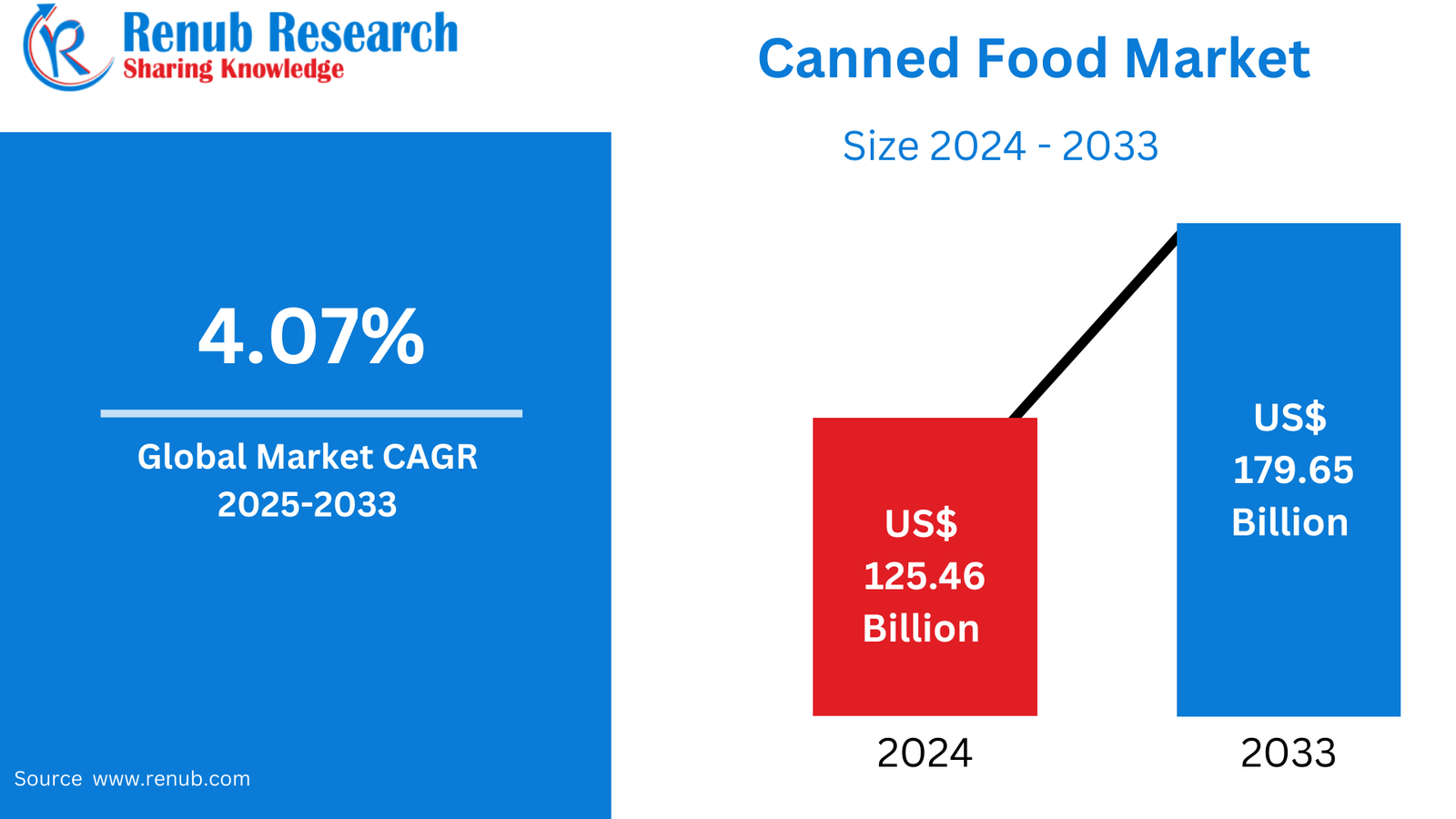
According to Renub Research Global Canned Food Market is projected to experience strong expansion, expected to reach US$ 179.65 billion by 2033, up from US$ 125.46 billion in 2024, registering a healthy CAGR of 4.07% from 2025 to 2033. Growing consumer demand for convenient meal solutions, extended shelf life, improved food safety, and increasing adoption of meal-prepping habits are major factors contributing to market momentum. Canned foods have evolved from emergency pantry staples to everyday household essentials, driven by affordability, durability, and the availability of nutritious and flavorful options.
Canned Food Market Outlook
Canned food refers to edible products preserved in airtight containers and heat sterilized to prevent spoilage and bacterial contamination. This preservation technique, originating in the 19th century, has become central to modern food storage due to its ability to retain nutrients, maintain freshness, and ensure long-term usability. Canned fruits, vegetables, seafood, meats, soups, and ready meals provide consumers with reliable, quick, and easy meal components suited to today’s fast-paced lifestyles.
Affordability and long storage stability make canned food a critical resource not only for household consumption but also for disaster preparedness, humanitarian aid, and emergency stockpiling. Its resilience during transportation and ability to remain consumable without refrigeration reinforce its importance in both developed economies and emerging markets. Increasing awareness about waste reduction and food sustainability further strengthens canned food adoption globally.
Download Free Sample Report:https://www.renub.com/request-sample-page.php?gturl=canned-food-market-p.php
Key Growth Drivers of the Canned Food Market
Rising Demand for Convenient and Ready-to-Eat Foods
The shift toward busy urban lifestyles, rising workforce participation, and increasing preference for time-efficient meal solutions are major contributors to canned food demand. Canned products offer minimal preparation time, consistent quality, and versatility, making them essential for working professionals, students, families, and travelers. Enhanced packaging innovations, improved nutritional preservation, and a wider range of flavors continue to build consumer confidence and accelerate global consumption.
Extended Shelf Life Supporting Food Security and Stability
Canned foods provide exceptional longevity, supporting food security and reducing spoilage risks. In regions facing supply chain volatility, economic uncertainty, or climatic disruptions, canned foods deliver reliability and resilience. Governments, relief organizations, military services, and emergency programs rely on canned products due to their durability and ability to withstand prolonged storage without refrigeration. As sustainability awareness grows, consumers increasingly see canned products as tools to minimize household food waste.
Increasing Product Variety and Premiumization Trends
The canned food industry has evolved significantly from basic staples to premium-grade offerings. Today’s consumers can access gourmet canned seafood, organic vegetables, exotic fruits, plant-based meals, low-sodium varieties, and preservative-free formulations. Premiumization is particularly strong in developed markets, driven by willingness to pay for quality, nutrition, and ethically sourced ingredients. Innovative flavors, modern branding, and attractive packaging designs, coupled with social media-driven culinary trends, have reshaped canned food perception and appeal.
Major Challenges Impacting the Canned Food Industry
Health Perception Issues and Nutritional Concerns
Despite improvements, some consumers still view canned foods as less healthy than fresh or frozen alternatives. Concerns regarding sodium levels, preservatives, and potential exposure to harmful can linings (such as BPA historically) contribute to cautious adoption among health-conscious buyers. While manufacturers increasingly use BPA-free packaging, low-sodium formulations, and cleaner ingredients, continued consumer education and transparent labeling are essential to overcome perception barriers.
Environmental Sustainability and Packaging Impact
Canned food production involves high material usage, particularly aluminum and steel, contributing to environmental footprint debates. Although cans are widely recyclable, recycling infrastructure and participation vary globally, creating sustainability inconsistencies. Growing consumer preference for eco-friendly packaging puts pressure on manufacturers to adopt greener materials, improve recycling processes, and invest in sustainable sourcing initiatives. Addressing these sustainability challenges is critical for long-term brand trust and market resilience.
Canned Meat and Seafood Market Overview
The canned meat and seafood segment is one of the largest contributors to overall market demand. Rising protein consumption, nutritional awareness, affordability, and accessibility drive the popularity of canned tuna, sardines, salmon, chicken, and beef products. Increasing health awareness related to omega-3 fatty acids further boosts seafood demand. However, sustainability concerns, overfishing risks, and raw material price fluctuations require balanced sourcing strategies and innovation to ensure long-term industry stability.
Canned Ready Meals Market Overview
Canned ready meals such as soups, pastas, stews, and curries are gaining momentum due to affordability, convenience, and improved taste quality. Technological advancements in canning processes help retain flavor and nutrients, boosting consumer acceptance. Expanding demand for ethnic meals, vegetarian options, and allergen-friendly offerings also supports this category. Health awareness surrounding preservatives and sodium content remains a challenge, but ongoing reformulation efforts are helping build trust.
Canned Organic Food Market Outlook
The demand for canned organic foods is increasing significantly, especially in developed regions such as North America and Europe. Consumers seeking chemical-free, clean-label, and sustainable food choices drive adoption of organic canned fruits, vegetables, soups, and legumes. Manufacturers focus on BPA-free cans, responsible sourcing, and eco-conscious packaging to align with sustainability expectations. Although higher price points may restrict accessibility in emerging markets, global interest in organic lifestyles ensures steady long-term growth.
Convenience Stores and E-Commerce Strengthening Market Distribution
Convenience stores play a vital role in canned food accessibility, especially in urban and developing regions where consumers seek quick, affordable, and ready-to-eat options. Small packaging formats and competitive pricing encourage impulse buying and repeat purchases.
Meanwhile, e-commerce is emerging as one of the fastest-growing distribution channels, offering broader product variety, subscription services, discounted bundles, and doorstep delivery convenience. Online grocery platforms gained significant traction during the pandemic, and sustained digital shopping habits continue fueling market expansion. Logistics optimization and product authenticity remain important focus areas for growth sustainability.
Regional Insights of the Global Canned Food Market
United States Canned Food Market
The United States market remains mature yet resilient, driven by demand for economical meals, premium canned seafood, low-sodium vegetables, and organic offerings. Diverse retail channels — including supermarkets, convenience stores, and expanding online platforms — ensure widespread accessibility. Increasing awareness of food waste prevention and pantry sustainability further supports demand.
France Canned Food Market
France demonstrates strong demand for premium and gourmet canned foods, supported by culinary heritage and high appreciation for product quality. Organic canned items and healthier formulations hold significant appeal. Retail supermarkets dominate distribution, while e-commerce acceptance continues to grow.
India Canned Food Market
India’s canned food market is expanding rapidly owing to urbanization, rising disposable incomes, and evolving eating habits. Demand is led by youth consumers, working professionals, and metro residents seeking convenience. While cultural preference for fresh food limits full-scale penetration, growing awareness, improved retail infrastructure, and rising exposure to international cuisines ensure long-term growth opportunities.
Brazil Canned Food Market
Brazil shows steady demand growth, driven by increasing middle-class purchasing power, urban migration, and rising protein consumption. Canned seafood, meats, and affordable staple foods remain particularly popular. Retail expansion and online grocery platforms contribute to stronger market presence.
Saudi Arabia Canned Food Market
Saudi Arabia’s canned food demand is supported by rapid urban development, increasing women workforce participation, large expatriate presence, and expanding modern retail infrastructure. Ready meals, seafood, and international cuisine cans register significant demand, although cultural preference for fresh food requires continued innovation in healthier canned offerings.
Market Segmentation of the Global Canned Food Market
Products include Canned Meat & Seafood, Fruits & Vegetables, Ready Meals, and Others.
Types include Organic and Conventional categories.
Distribution channels include Supermarkets & Hypermarkets, Convenience Stores, E-Commerce, and Other Retail Formats.
Geographical coverage spans North America, Europe, Asia-Pacific, Latin America, Middle East, and Africa, with key countries including the United States, Canada, France, Germany, India, China, Brazil, Saudi Arabia, UAE, South Africa, and more.
Competitive Landscape of the Global Canned Food Market
The canned food market is competitive with global food manufacturers, premium canned brands, and regional producers focusing on innovation, quality improvement, clean-label offerings, and sustainability initiatives. Major companies include:
Ayam Sarl
Bonduelle
Campbell Soup Company
CHB Group
Danish Crown AmbA
Del Monte Foods Inc.
Nestlé S.A.
Thai Union Group PCL
The Bolton Group
These players focus on product premiumization, eco-friendly packaging, strategic partnerships, technological advancements, and new product launches to strengthen market presence and meet evolving consumer preferences.
Future Outlook of the Canned Food Market
The future of the global canned food market appears highly promising, supported by convenience demands, expanding product innovation, sustainability improvements, and increasing integration of canned foods into everyday meal solutions. As technological advancements improve taste preservation, nutritional quality, and eco-conscious packaging, consumer trust and adoption will continue strengthening.
With strong retail expansion, online grocery growth, and evolving food security concerns, the canned food market is expected to maintain stable and sustainable growth, reaching US$ 179.65 billion by 2033 and establishing its role as an indispensable component of modern global food consumption.
