
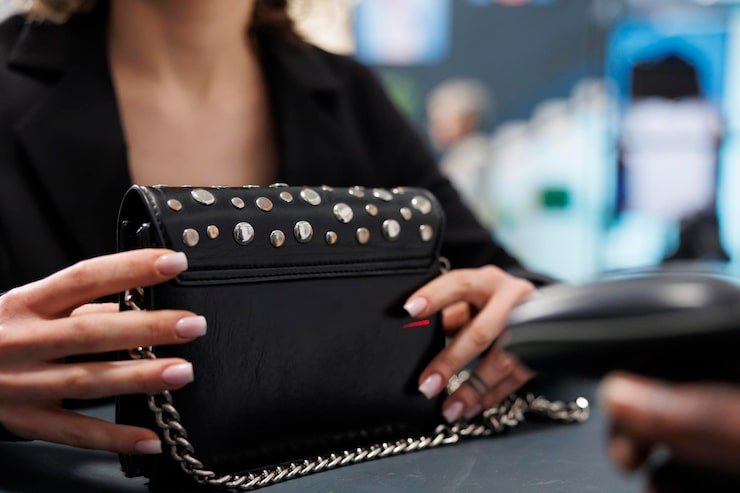
The allure of owning a piece of fashion history has never been stronger than it is in 2026. As iconic luxury houses tighten their supply chains, the secondary market has become the primary destination for collectors seeking rare and vintage pieces. However, this high-demand environment has paved the way for a sophisticated counterfeit industry. To protect the sanctity of these artistic creations, luxury bag authentication has evolved into a meticulous discipline that combines historical knowledge with modern forensic science. For a serious collector, understanding the “soul” of a bag—the way the leather ages, the sound of the hardware, and the precision of the stitching—is the only way to ensure that their investment is a genuine masterpiece. Authentic items are not just products; they are legacies that carry the reputation of artisans who have spent decades perfecting their craft.
The Ethical Importance of Verifying Your Collection
Choosing to invest in professional verification is more than just a financial safeguard; it is an ethical stand against the global counterfeit trade. In 2026, luxury bag authentication serves as a barrier that prevents illicit organizations from profiting off stolen intellectual property. When you verify a bag, you are validating the months of labor and the high-quality materials used by genuine fashion houses.
A certified authentic item maintains a “clean” history on the blockchain, ensuring that its value remains intact for future generations. For the modern consumer, transparency is the ultimate luxury. By insisting on a verified origin, you contribute to a sustainable fashion ecosystem where quality and heritage are valued over mass-produced imitations. This commitment to truth is what maintains the prestige of the luxury world and ensures that the art of fine leather-working continues to thrive.
Decoding Advanced Authentication Protocols
Modern authentication in 2026 is a multi-layered process that leaves no stone unturned. It is a journey into the DNA of the object, checking for details that the average person—and even advanced machines—might overlook.
1. Tactile Response and Material Integrity
The “Hand-Feel” of a luxury bag is its most difficult feature to replicate. Authenticators in 2026 are trained to recognize the specific oil content and suppleness of Togo leather or the distinct stiffness of Epsom. They use thermal sensors to check how the material reacts to body heat. Genuine leather breathes and has a natural, slightly irregular pore structure. Counterfeits, even high-end “mirror” copies, often use chemically treated leathers that feel unnaturally smooth or have a faint synthetic odor that becomes apparent under professional testing.
2. The Geometry of the Stitch
The stitching on a luxury bag is like a signature. Each brand has a specific “Signature Angle” and tension. For instance, the slant of a hand-sewn stitch is asymmetrical and has a slight “rise” that machine-made fakes cannot replicate. Authenticators use digital mapping to ensure the stitch count is consistent with the bag’s production year and factory location. Any deviation in the thread’s thickness or a single “double-stitch” in the wrong place is a definitive sign of a counterfeit production.
3. Hardware Metallurgy and Sound
In 2026, the metal used in zippers and clasps is a major giveaway. Authentic hardware is often carved from solid blocks of metal and then plated with 24K gold or palladium. Authenticators use “Acoustic Testing” to hear the click of a lock; a genuine Chanel or Hermès clasp has a deep, solid sound, while a fake will sound hollow and “tinny.” Furthermore, the engravings are checked under 10x magnification to ensure the edges of the letters are smooth and not jagged, which is a common byproduct of cheap laser engraving used by counterfeiters.
The Future of Digital Certificates and AI
As we navigate through 2026, the industry has embraced “AI-Optical Verification.” By uploading ultra-high-resolution photos of the bag’s interior labels and hardware, an AI can analyze the microscopic pixel patterns to determine if the item was made on an official production line. This is then cross-referenced with the brand’s digital database. While this technology is incredibly fast, it is always used as a supplement to human expertise. The most trusted certificates of authenticity today are those that combine an AI “Probability Score” with a physical inspection by a master authenticator. This dual-verification system has made it nearly impossible for high-grade fakes to enter the legitimate resale market, providing a new level of security for online buyers.
Conclusion: Honoring the Art of Luxury
Authenticity is the foundation upon which the entire luxury industry is built. A designer bag is more than a container for your belongings; it is a symbol of status, a work of art, and a repository of history. As the world becomes increasingly digital, the value of a physical, handcrafted item only grows. By prioritizing professional verification, you are honoring the artisans and the heritage that make these pieces so special. Never settle for “good enough” when it comes to your collection. Protect your assets, uphold the standards of high fashion, and always ensure that every piece you carry is as authentic as your own personal style. In the end, true luxury is the peace of mind that comes from knowing you own the real thing.
