

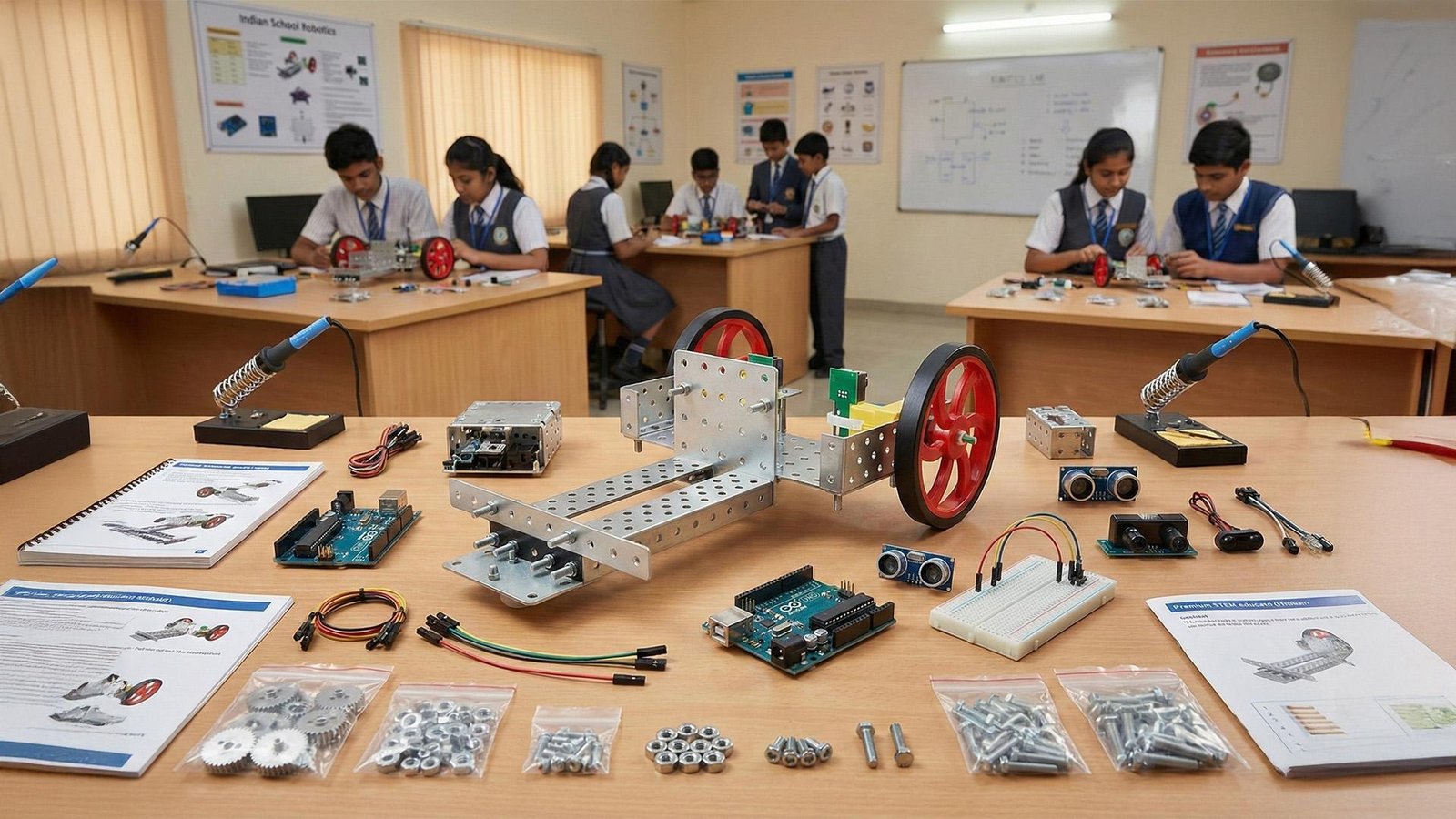
Establishing a Tinkering Lab in Delhi will provide schools with the tools to enhance their education and become innovators of the future. Innovative ATAL Tinkering Lab Delhi offers ways for schools to create opportunities for students to develop creatively through hands-on learning methods and a strong foundation in STEM (Science, Technology, Engineering, and Mathematics) education.
Steps to Integrate ATAL Tinkering Labs in Delhi Schools
ATAL Tinkering Labs promote innovation, imagination, and problem-solving skills among students. They will have access to a dedicated space to experiment with new ideas using the latest technology.
Step 1: Planning and Vision
In order to establish an ATAL Tinkering Lab in Delhi, the first step is to have a clear vision and objectives for the lab. Schools need to know how the smart lab will assist them in achieving their curriculum objectives for student development.
Your planning must include:
- The school’s available space.
- The school’s budget and potential funding sources.
- The curriculum objectives for the school and develop objectives for the school.
- The student population that will be able to use the ATL.
Please establish a clear vision for the lab to help ensure success in phase two of establishing an ATL.
Step 2: Collaborate with the Right Robotics Company
Implementing robotics successfully starts with selecting a reputable robotics company in Delhi NCR. If you choose the right partner to help implement robotics, you will receive support throughout the entire process, from setup to training.
Robospecies offers the following:
- Full ATL lab configuration and setup solutions
- Customised curriculum and STEM and robotics programs
- Installation and configuration of equipment
- Teacher training programs
Robospecies provides innovative products that simplify the process for schools.
Step 3: Setting Up Infrastructure and Equipment
The third step of implementation includes establishing the laboratories’ infrastructure. It entails the installation of all the tools, kits, and software that will enable hands-on learning.
An ATAL laboratory typically contains the following tools and pieces of equipment:
- Kits and components for robotics
- Sensors and microcontrollers
- Artificial Intelligence (AI) tools and coding tools
- Students’ laboratories with hardware workspaces
Additionally, a more complete and well-stocked ATAL laboratory will provide students with a better avenue to learn.
Step 4: Curriculum Integration and Training
The fourth step of implementation includes integrating the ATAL laboratory within the school’s curriculum and providing additional training to teachers who will be supporting students in hands-on learning.
Robospecies, an innovative robotics company in Delhi, provides the following resources to educators and pupils in ATAL labs:
- Structured lesson plans
- Hands-on project modules
- Educator training/workshops
- Consistent support for educators and pupils throughout their academic careers
These resources will deliver the highest level of benefit for teachers and students working in the ATAL Lab.
Step 5: Implementation and Student Engagement
Once the setup and training are done, it’s time to use them properly. Students must be engaged in the ATAL lab, completing projects and learning something new each day.
Successful strategies for improving this student engagement are:
- Conducting innovation challenges.
- Setting up Workshops and hackathons.
- Encouraging collaborative learning.
Conclusion
Establishing an ATAL lab takes a lot of planning and expertise. Working with the right partner and using the correct methodology will create innovative learning environments that prepare students for future technologies.
