

Global Footwear Market Analysis
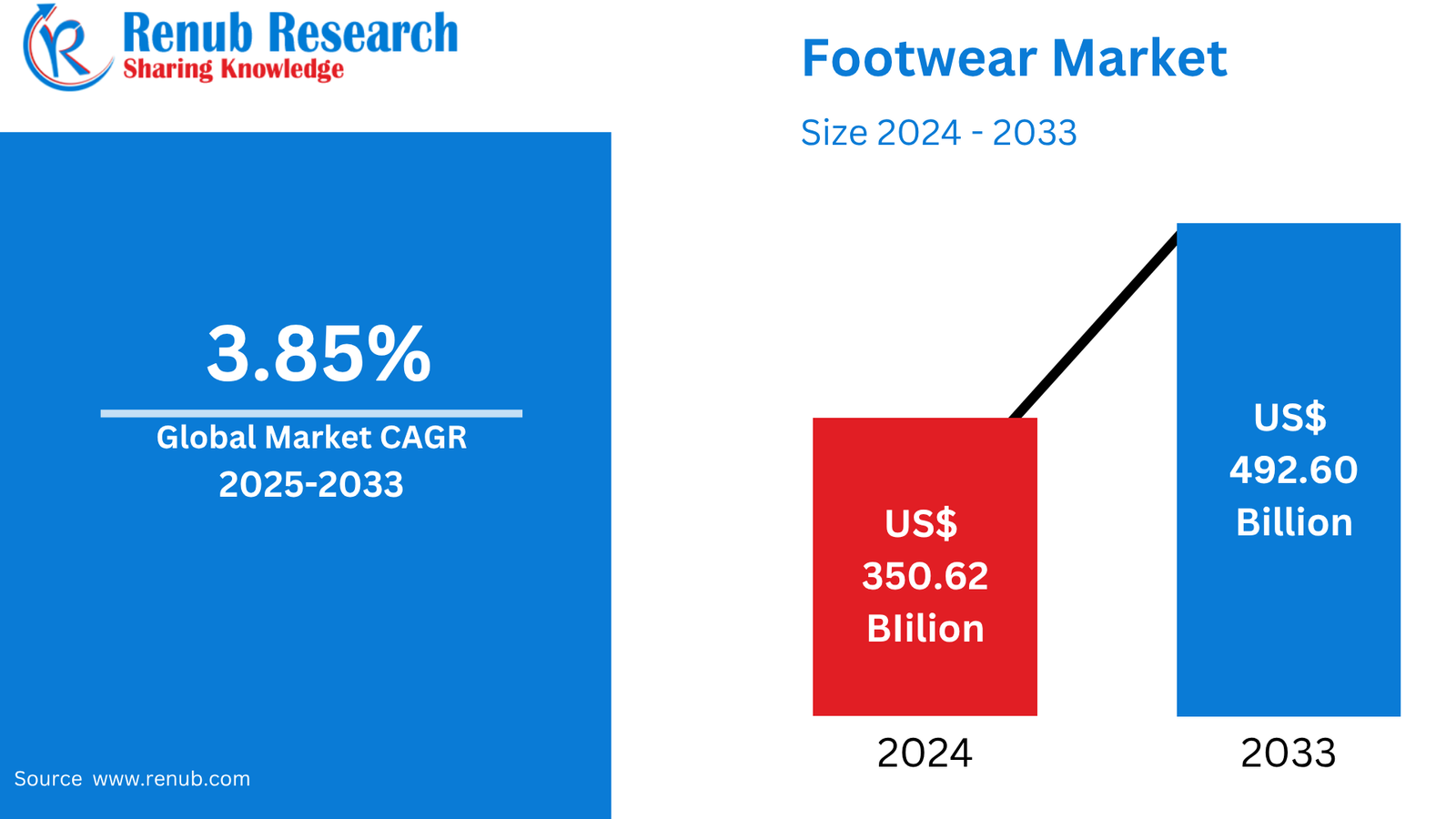
According to Renub Research global footwear market demonstrated strong resilience and steady growth, with its size estimated at US$ 350.62 billion in 2024. It is projected to expand to US$ 492.60 billion by 2033, registering a compound annual growth rate (CAGR) of 3.85% from 2025 to 2033.
Market expansion is driven by rising fashion awareness, increasing disposable incomes, growing penetration of e-commerce platforms, and heightened demand for performance-oriented and sustainable footwear. Consumers across all age groups are increasingly seeking footwear that combines comfort, durability, and style, reinforcing long-term market growth.
Global Footwear Market Overview
Footwear refers to garments worn on the feet for protection, comfort, and aesthetic appeal. It includes shoes, boots, sandals, slippers, and sneakers designed for casual wear, sports, professional environments, and specialized industrial applications. Footwear protects against environmental hazards such as uneven terrain, extreme weather, and workplace risks while also providing structural support and enhancing mobility.
Beyond functionality, footwear is a major component of personal style and cultural expression. It reflects fashion trends, social identity, and lifestyle preferences. Technological advancements have transformed footwear design, improving breathability, cushioning, shock absorption, and performance—particularly in athletic and professional footwear categories.
Request a free sample copy of the report:https://www.renub.com/request-sample-page.php?gturl=global-footwear-market-p.php
Global Footwear Market Outlooks
The outlook for the global footwear market remains positive, supported by evolving consumer preferences and innovation-driven product development. Brands are increasingly focusing on ergonomic design, advanced materials, and sustainability to differentiate themselves in a competitive landscape.
Urbanization, lifestyle changes, and the growing influence of social media and celebrity endorsements are shaping purchasing decisions. Additionally, footwear companies are leveraging omnichannel strategies to provide seamless shopping experiences, blending online and offline retail formats.
Increasing Health Awareness and Sports Participation
Rising health consciousness and participation in sports and fitness activities are significantly boosting demand for athletic footwear. Consumers are increasingly investing in running shoes, training footwear, and sport-specific shoes designed to enhance performance and prevent injuries.
Manufacturers are responding by launching innovative products that incorporate lightweight materials, superior cushioning, and smart technologies. This trend is particularly strong among younger consumers and urban populations, contributing substantially to overall market growth.
Expansion of E-Commerce Platforms
The rapid expansion of e-commerce has revolutionized footwear retail. Online platforms offer consumers access to a vast range of products, competitive pricing, detailed product information, and convenient home delivery with flexible return policies.
Brands benefit from e-commerce through direct-to-consumer sales, personalized marketing, and real-time consumer insights. Technologies such as virtual try-ons, augmented reality, and AI-driven recommendations are enhancing online shopping experiences and driving higher conversion rates.
Rising Demand for Sustainable and Ethical Footwear
Environmental sustainability and ethical manufacturing practices are increasingly influencing consumer behavior. Demand for footwear made from recycled, biodegradable, and low-impact materials is rising across global markets.
Brands that emphasize transparency, eco-friendly production, and responsible sourcing are gaining a competitive edge. Sustainability initiatives, such as footwear recycling programs and carbon footprint reduction strategies, are becoming integral to brand positioning and long-term growth.
High Market Competition and Price Sensitivity Challenges
The global footwear market is highly competitive, with numerous international and regional brands competing for consumer attention. Market saturation has intensified price competition, affecting profit margins, especially in mass-market segments.
In emerging economies, consumers tend to be highly price-sensitive, making it challenging for premium brands to expand without adapting pricing strategies. Balancing affordability with quality and brand value remains a key challenge for manufacturers.
Supply Chain Disruptions and Regulatory Challenges
Global footwear supply chains have been disrupted by geopolitical tensions, pandemics, and logistics constraints. These disruptions have impacted production schedules, increased transportation costs, and delayed product availability.
Additionally, varying regulations across countries regarding labor practices, material sourcing, and environmental compliance add complexity for manufacturers operating internationally. Navigating these regulatory frameworks is critical to ensuring operational continuity and market expansion.
Global Athletic Footwear Market
The athletic footwear segment continues to experience strong growth due to rising participation in fitness activities and sports. Consumers are increasingly seeking specialized footwear that enhances comfort, performance, and injury prevention.
Technological integration, including smart footwear with performance-tracking capabilities, is gaining popularity. The use of sustainable materials in athletic footwear is also increasing, aligning with broader environmental trends.
Global Leather Footwear Market
Leather footwear remains a symbol of quality, durability, and premium appeal. Demand is driven by consumers seeking long-lasting and stylish products for formal, casual, and professional use.
However, challenges such as counterfeit products and the growing availability of synthetic alternatives are impacting the segment. Design innovation and sustainable leather processing practices are helping maintain consumer interest and market relevance.
Global E-Commerce Footwear Market
Online footwear retail has transformed consumer purchasing behavior by offering unmatched convenience and product variety. Digital platforms provide detailed descriptions, customer reviews, and personalized recommendations that enhance decision-making.
Adoption of technologies such as AI-driven personalization and virtual fitting tools is further accelerating online footwear sales, making e-commerce one of the fastest-growing distribution channels.
Global Men’s Footwear Market
The men’s footwear market is expanding as male consumers place increasing importance on style, comfort, and versatility. Demand is rising for casual, athleisure, and multi-purpose footwear suitable for both work and leisure.
Fashion-forward designs combined with functional features are driving innovation and boosting sales across this segment.
Global Women’s Footwear Market
Women’s footwear remains the largest segment due to diverse style preferences and frequent purchasing behavior. Women often own multiple footwear types for different occasions, contributing to higher market demand.
The growing popularity of women’s sports and fitness activities is also driving demand for athletic and performance footwear within this segment.
United States Footwear Market
The U.S. footwear market is characterized by high consumer spending, strong brand presence, and rapid adoption of technological innovations. Sustainability, smart footwear features, and athleisure trends are shaping consumer preferences.
The growth of e-commerce has significantly influenced purchasing behavior, while demand for comfortable yet stylish footwear continues to rise across demographics.
France Footwear Market
France’s footwear market is deeply connected to fashion and luxury trends. Consumers prioritize design, craftsmanship, and quality, particularly in women’s footwear.
Alongside luxury products, there is increasing demand for sports-inspired and comfort-focused footwear. The French market balances elegance with functionality, appealing to a broad consumer base.
India Footwear Market
India’s footwear market is experiencing strong growth driven by rising disposable incomes, urbanization, and increased fashion awareness. The market spans affordable, mid-range, and premium segments, catering to diverse consumer needs.
E-commerce expansion has improved access to branded footwear, while challenges such as counterfeit products and price sensitivity persist. Continued innovation and domestic manufacturing are expected to support long-term growth.
Saudi Arabia Footwear Market
Saudi Arabia’s footwear market is evolving rapidly, driven by rising disposable incomes and growing demand for premium and branded products. Global fashion trends and digital retail platforms are influencing consumer choices.
Sustainability and high-tech footwear innovations are gaining traction as environmentally conscious consumers seek responsible products. The market is well-positioned for sustained growth as lifestyle preferences evolve.
Global Footwear Market Segmentation by Product
The market is segmented into non-athletic and athletic footwear. Athletic footwear continues to gain traction due to rising fitness awareness, while non-athletic footwear maintains strong demand for casual, formal, and professional use.
Global Footwear Market Segmentation by Material
Based on material, the market includes leather and non-leather footwear. Leather footwear dominates the premium segment, while non-leather footwear benefits from affordability and sustainability-focused innovation.
Global Footwear Market Segmentation by Distribution Channel
Distribution channels include e-commerce and offline retail stores. E-commerce is the fastest-growing channel, supported by digital innovation, while offline stores remain important for experiential shopping.
Global Footwear Market Segmentation by End User
The market serves men, women, and children. Women’s footwear leads market revenue, followed by men’s footwear, while children’s footwear shows steady growth driven by rising population and lifestyle changes.
Competitive Landscape and Key Players Analysis
The global footwear market is highly competitive, with key players focusing on innovation, sustainability, digital expansion, and brand differentiation. Companies are investing in product development, strategic partnerships, and global expansion to strengthen market presence.
Future Outlook of the Global Footwear Market
The future of the global footwear market remains optimistic, driven by evolving fashion trends, technological innovation, and increasing demand for sustainable products. Continued growth in e-commerce, performance footwear, and emerging markets will further support expansion through 2033.
As consumers increasingly prioritize comfort, style, and environmental responsibility, footwear brands that adapt to these trends are expected to achieve sustained competitive advantage.
