

Introduction: The Shift Toward Digitized Energy Infrastructure
Modern energy and utility networks are changing fast. Instead of relying on a single, central power system, energy is now generated in many places like solar and wind plants, small microgrids, and remote substations. In addition, utilities now manage a growing number of remote pumping stations, water treatment facilities, and pipelines spread across vast geographical areas.
This decentralization introduces new challenges: how do operators maintain real-time visibility, ensure timely fault detection, and control these dispersed assets effectively?
Remote Terminal Units (RTUs) provide the solution. Acting as the critical interface between field equipment and central control systems, RTU controllers allow utilities to monitor, control, and optimize their networks efficiently and securely. By digitizing telecontrol operations, RTUs reduce operational risks, minimize downtime & support the modernization of critical infrastructure.
What Is a Remote Terminal Unit (RTU)?
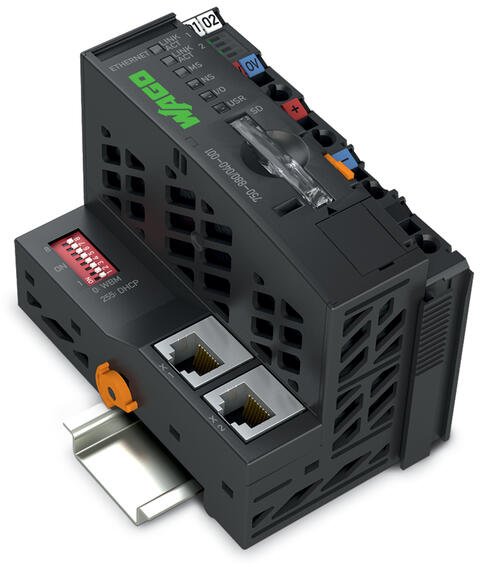
A Remote Terminal Unit is a field-based device designed to gather operational data from sensors, meters, and I/O modules. It serves as a bridge between the field and the central control room, transmitting measurement data, alarms, and system status to supervisory platforms in real time.
Modern RTUs feature modular hardware, allowing organizations to customize I/O modules for each application. They come with multiple communication interfaces and adhere to stringent security standards, ensuring reliable operation in critical infrastructure environments. Unlike traditional PLCs, which focus primarily on local automation tasks, RTUs are purpose-built for remote monitoring, telecontrol communication, and distributed network management.
Key Benefits:
- Real-time monitoring of geographically dispersed assets
- Modular, scalable architecture for flexible deployment
- Optimized for telecontrol and remote operations
By integrating RTUs, utilities gain complete oversight of their network’s health, enabling faster interventions and more informed operational decisions.
Why Telecontrol Systems Require RTU Controllers
Managing widely distributed infrastructure manually is costly and prone to delays. Inspecting substations, pumping stations, or pipelines on-site can take hours or days, and faults may go unnoticed until they escalate.
RTU controllers enable continuous monitoring, remote diagnostics, and automated control actions from central control centers. Operators can detect anomalies instantly, issue commands to field devices, and implement corrective actions without physically visiting each site. This significantly reduces operational costs while improving response times.
Operational Advantages:
- Reduced need for on-site personnel, freeing resources for other critical tasks
- Faster fault detection and response to avoid prolonged downtime
- Improved operational efficiency and cost savings through centralized control
By automating telecontrol, utilities can maintain network stability even under challenging conditions, such as extreme temperatures, vibrations, or electromagnetic interference.
Communication Protocols Used by RTU Systems
Reliable communication is the backbone of telecontrol systems. RTUs support standardized protocols that ensure interoperability across diverse networks:
- IEC 60870-5-101/104 widely adopted in power distribution systems
- IEC 61850 designed for modern substation automation
- DNP3 used in telemetry for utilities and industrial networks
- Modbus facilitates industrial device connectivity
Furthermore, RTU controllers can act as clients, servers, or communication gateways, bridging different protocol systems while maintaining secure and reliable data exchange. This versatility ensures that operators can integrate RTUs into legacy systems or next-generation smart grids with minimal disruption.
Integration with SCADA and Telemetry Platforms
RTUs transmit real-time data to SCADA systems, energy management platforms, and telemetry applications, enabling operators to monitor and control remote equipment from a centralized location.
Modern RTUs also support industrial Ethernet, IoT connectivity, and edge computing, which allows them to preprocess and aggregate data before sending it upstream. This reduces network load, improves response times, and enhances decision-making.
Integration Benefits
- Bi-directional communication for remote command execution
- Edge processing for faster analytics and actionable insights
- Seamless integration with SCADA, IoT, and cloud-based monitoring systems
With this integration, operators gain a comprehensive view of network performance, allowing predictive maintenance and proactive problem resolution.
Operational Advantages of RTU-Based Monitoring
RTU-enabled telecontrol systems deliver measurable operational benefits:
- Enhanced system visibility across substations, pipelines, and treatment plants
- Automated alerts for equipment anomalies, minimizing downtime
- Predictive maintenance through performance tracking and trend analysis
- Long-term cost savings from reduced manual inspections and optimized resource allocation
By leveraging RTUs, utilities can improve network reliability, reduce operational risks, and ensure uninterrupted service delivery.
Future Outlook for RTU Technology in Utility Networks
RTU controllers are increasingly central to the digital transformation of utility and infrastructure networks. Future-ready RTUs support:
- Edge computing and distributed analytics for faster decision-making
- Containerized applications on open Linux-based platforms for flexible telecontrol deployments
- Secure remote firmware updates and advanced cybersecurity measures to protect critical infrastructure
As utility networks become more interconnected and digitalized, RTUs will remain a key component for safe, reliable, and efficient telecontrol, enabling operators to manage complex energy, water, and industrial networks with confidence.
