
Assisted Reproductive Technology Market Size & Forecast 2025–2033
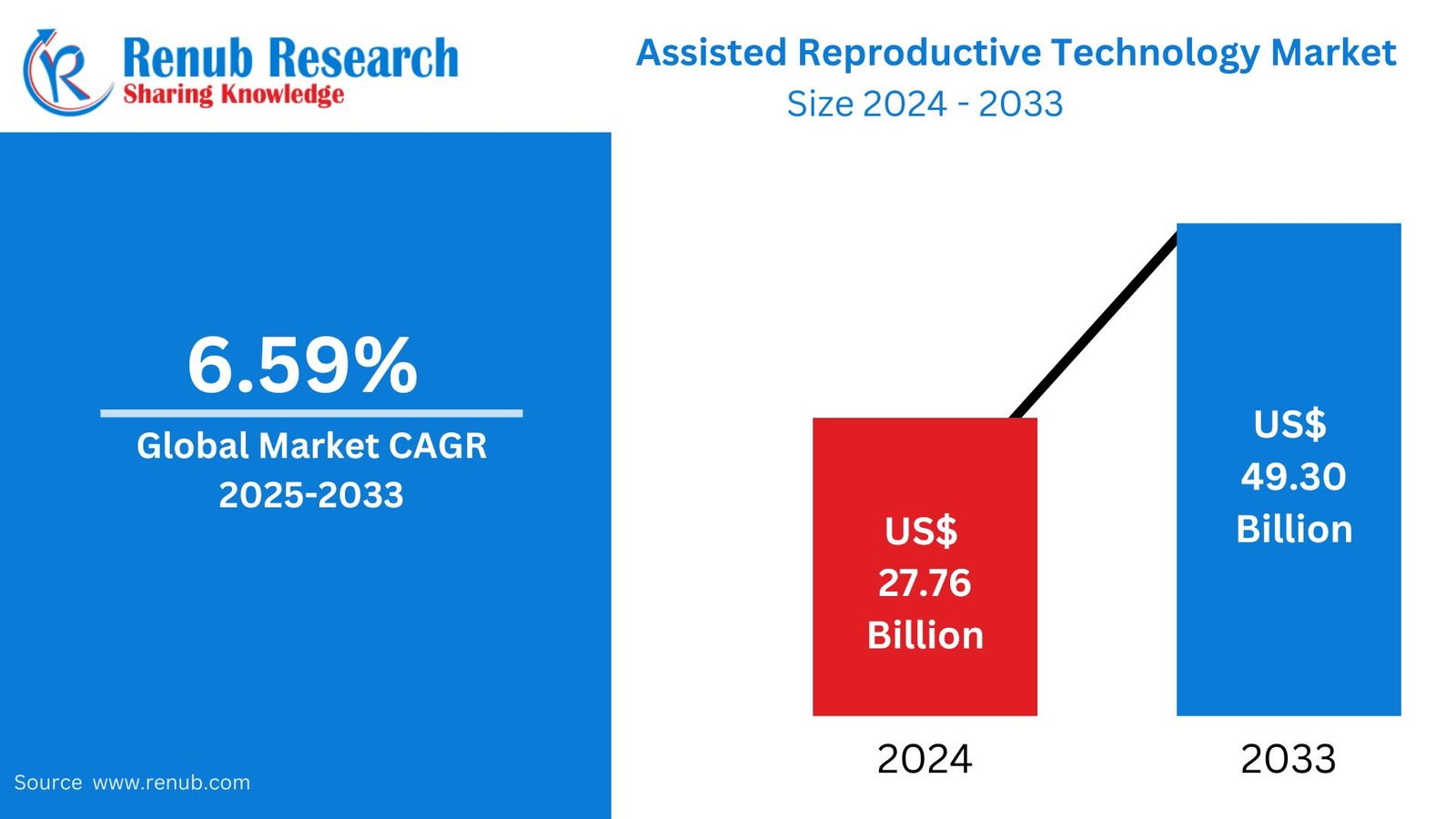
The Global Assisted Reproductive Technology (ART) Market was valued at USD 27.76 billion in 2024 and is expected to reach USD 49.30 billion by 2033, growing at a strong CAGR of 6.59% from 2025 to 2033. Market growth is driven by rising global infertility rates, delayed parenthood trends, technological advancements in reproductive medicine, expanding availability of fertility clinics, and increasing public awareness of fertility treatment options. Supportive regulatory frameworks, insurance coverage improvements, and growing acceptance of ART among diverse family structures—including single parents and LGBTQ+ couples—further enhance global market expansion.
Download Free Sample Report:https://www.renub.com/request-sample-page.php?gturl=assisted-reproductive-technology-market-analysis-p.php
Global Assisted Reproductive Technology Industry Overview
Assisted Reproductive Technology encompasses advanced medical techniques used to support conception in individuals or couples unable to conceive naturally. Key ART procedures include In Vitro Fertilization (IVF), Intracytoplasmic Sperm Injection (ICSI), embryo freezing, egg and sperm donation, preimplantation genetic testing (PGT), cryopreservation, and gestational surrogacy. These methods involve the handling of eggs, sperm, or embryos outside the human body, improving the likelihood of successful pregnancy among individuals facing infertility due to ovulatory disorders, hormonal imbalances, fallopian tube complications, endometriosis, male infertility, age-related decline, genetic issues, or unexplained infertility.
The global ART market is expanding rapidly due to increased infertility prevalence influenced by lifestyle stress, environmental toxins, sedentary habits, obesity, and delayed family planning trends. Technological innovations—such as advanced embryo culture media, AI-driven embryo selection, time-lapse imaging systems, robotic micromanipulation, precision genetic screening, and improved cryopreservation methods—have significantly boosted treatment success rates. Fertility clinics worldwide are expanding geographically, with particularly strong growth across North America, Europe, and emerging Asian markets. Growing medical tourism, increased awareness campaigns, and normalization of fertility care discussions continue to accelerate ART adoption globally.
Key Market Growth Drivers for the Assisted Reproductive Technology Market
Rising Global Infertility Rates and Delayed Parenthood
Increasing infertility cases among both men and women remain the foremost driver of ART demand. Modern lifestyle changes, late marriages, delayed pregnancy decisions, environmental pollution, hormonal disorders, and declining sperm quality have collectively increased clinical fertility challenges. Women pursuing careers and education often postpone motherhood, contributing to age-related infertility trends and boosting demand for egg freezing and IVF services.
Technological Advancements Enhancing Success Rates
Technological innovations have revolutionized reproductive medicine. Enhanced embryo screening technologies, AI-supported embryo grading, minimally invasive fertility procedures, and improved laboratory systems have dramatically increased success probabilities while improving patient experience. Cryopreservation advancements—particularly vitrification—allow successful preservation of eggs and embryos, supporting fertility preservation among cancer patients and elective preservation cases.
Growing Awareness, Acceptance, and Access to Fertility Treatments
Public awareness of fertility treatment options is increasing thanks to educational campaigns, digital healthcare platforms, and widespread social acceptance of ART solutions. Governments and private insurers in certain regions are gradually adopting supportive reimbursement policies, reducing financial burden and expanding market accessibility. Meanwhile, rapid clinic expansion, improved healthcare infrastructure, and fertility tourism in regions like India, Thailand, Spain, and the Middle East have contributed to strong global ART adoption.
Challenges in the Assisted Reproductive Technology Market
High Treatment Costs and Limited Insurance Coverage
ART procedures require sophisticated medical infrastructure, expertise, and advanced laboratory technologies, making treatments expensive. Limited insurance reimbursement in many regions restricts accessibility for lower-income populations, posing a challenge to market penetration.
Ethical, Legal, and Emotional Complexities
Ethical debates, legal regulations surrounding embryo storage, genetic screening, surrogacy laws, and cultural barriers affect ART adoption in various regions. Additionally, emotional and psychological stress related to multiple treatment cycles can influence patient decisions.
Regional Insights into the ART Market
North America dominates due to strong technological adoption, robust healthcare infrastructure, established fertility networks, and high awareness levels.
Europe remains a major contributor, supported by favorable ART regulations, advanced clinics, and government-funded reproductive programs in several nations.
Asia-Pacific is the fastest growing region—driven by rising infertility, economic development, expanding fertility centers, medical tourism, and increasing affordability in countries such as India, Japan, China, and South Korea.
Middle East & Africa and Latin America show emerging potential due to evolving healthcare reforms and rising demand.
Competitive Landscape and Leading Players
The ART market is highly competitive, featuring biotechnology leaders, life science technology providers, fertility service companies, and specialized reproductive healthcare firms. Major companies include Thermo Fisher Scientific, SMFG, CooperSurgical, Fujifilm Holdings, Merck KGaA, Progyny, Vitrolife, Cook Medical, Natera, Sartorius, Organon, Ferring Pharmaceuticals, Genea Biomedx, IVF Holland NV, ReproMed Systems, Ovation Fertility, CooperGenomics, Xytex CryoInternational, and IVI Fertility Network.
Companies emphasize innovation, partnerships with fertility clinics, product development in embryo culture systems, cryotechnology, artificial intelligence in treatment planning, and expansion into emerging fertility markets.
Product Launches and Strategic Developments
Recent developments highlight new vitrification devices, AI-enabled diagnostic tools, comprehensive fertility and life-stage wellness programs, genetic testing advancements, and expanded ART support infrastructures. Investments in clinical innovation, training programs for fertility specialists, and enhanced patient care platforms are strengthening industry evolution.
Sustainability Strategies Strengthening Market Position
Sustainability is increasingly influencing ART operations, with companies focusing on energy-efficient laboratory equipment, waste reduction, eco-friendly consumables, reusable laboratory components, and improved lifecycle resource efficiency. Organizations also emphasize ethical sourcing, reduced chemical waste, carbon reduction policies, and sustainable fertility care models.
Market Segmentation of the Assisted Reproductive Technology Market
The ART market is segmented by technology (IVF, ICSI, cryopreservation, AI-assisted ART, genetic screening), procedure stage, patient group, end-use (fertility clinics, hospitals, cryobanks), and region. Continuous developments in egg and embryo banking, donor programs, and fertility preservation programs significantly contribute to evolving market structure.
Future Outlook of the Assisted Reproductive Technology Market 2025–2033
The global ART market is poised for sustained growth driven by technological evolution, rising infertility cases, greater social acceptance, improved clinic accessibility, and supportive regulatory measures. Integration of artificial intelligence, precision reproductive medicine, genetic innovations, and advancements in cryotechnology will continue enhancing success rates and patient outcomes. As fertility awareness expands worldwide, ART will remain a cornerstone of global reproductive healthcare and modern family-building solutions through 2033 and beyond.
