

Outsourcing SEO has become one of the most strategic moves a business can make—whether you’re a bootstrapped startup, a growing eCommerce brand, or an enterprise trying to scale online visibility. With search engines handling billions of searches daily, SEO is no longer optional. It’s the backbone of digital growth, lead generation, and brand discovery.
But outsourcing SEO is not as simple as hiring the first agency you find online. The wrong agency can waste your time, money, and momentum. The right one, however, can transform your website into a powerful marketing engine that works for you 24/7.
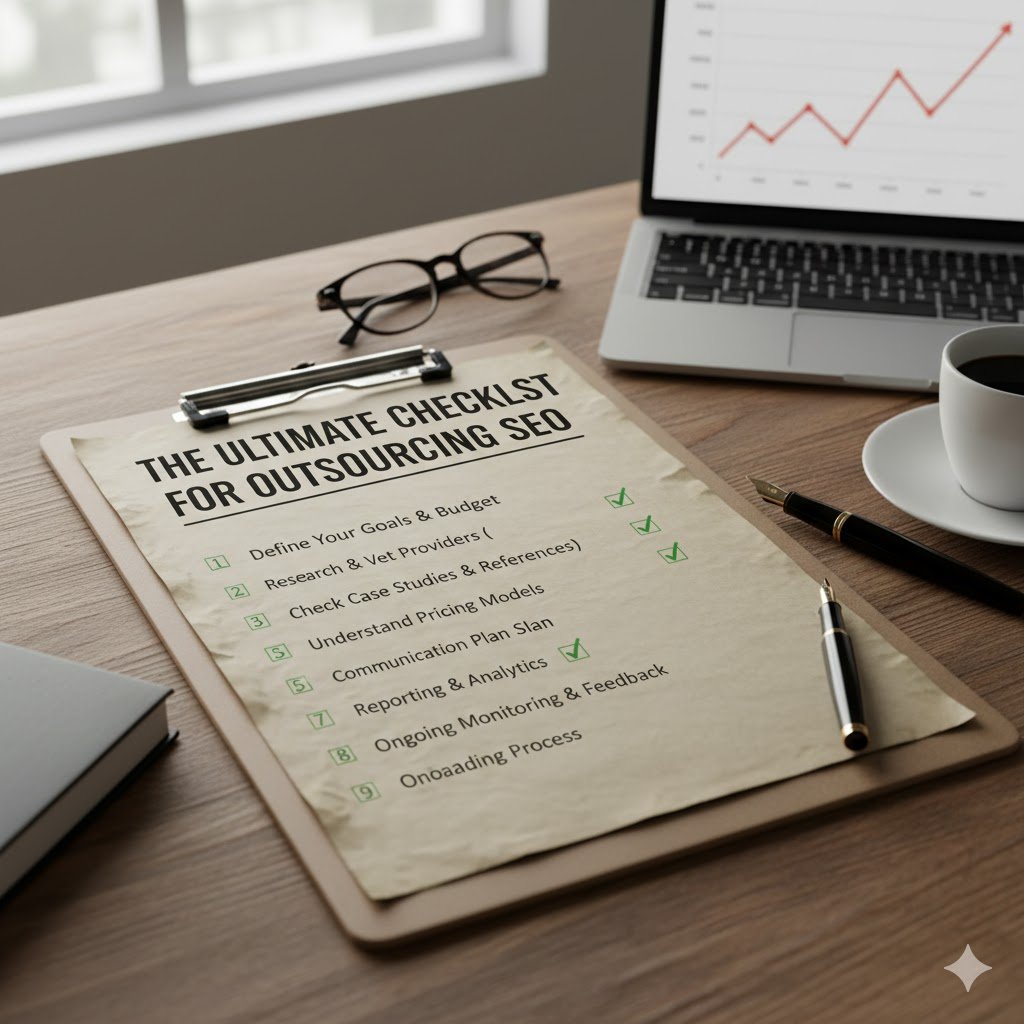
This ultimate checklist for outsourcing SEO will guide you step-by-step through everything you need to know—what to look for, what to avoid, how to evaluate an agency, what questions to ask, and how to ensure long-term success.
1. Understand Why You’re Outsourcing SEO
Before hiring anyone, you must understand your own reasons for outsourcing. This clarity helps you communicate better and choose the right provider.
Common Reasons Businesses Outsource SEO
- Lack of internal expertise
SEO requires knowledge across content, technical optimization, analytics, and strategy—skills many teams don’t have in-house. - Time constraints
SEO is ongoing. If done correctly, it requires weekly monitoring, content creation, testing, and adjusting. - Cost efficiency
Hiring a full internal SEO team is expensive. Outsourcing lets you access expert-level talent at a fraction of the cost. - Scalability
Agencies can scale efforts up or down based on your goals—something in-house teams struggle with. - Access to tools and technology
Professional SEO tools (Ahrefs, SEMrush, Screaming Frog, Surfer, etc.) are costly. Agencies already have them.
Your first checklist step
✔️ Write down why you need SEO help
✔️ Identify your main goals: traffic, leads, sales, brand visibility, or technical improvements
✔️ Understand your timeline expectations (SEO takes months, not days)
2. Define Your SEO Goals Clearly
SEO is broad—and every business has different needs. You must clarify what success means to you.
Examples of SEO Goals
- Increase organic traffic by 50% in 12 months
- Rank for specific high-intent keywords
- Improve eCommerce conversions
- Fix technical SEO issues
- Create a long-term content strategy
- Build high-quality backlinks
- Improve local visibility (Google Maps, local listings)
Your checklist
✔️ Document short-term and long-term goals
✔️ Set measurable KPIs (keyword rankings, traffic, conversions, etc.)
✔️ Determine whether you need ongoing SEO or one-time fixes
3. Identify What SEO Services You Need
Not all SEO agencies specialize in the same things. Some are great at technical SEO but weak at content. Others excel at link building but lack auditing skills.
Here are the major service categories to consider:
On-Page SEO
- Keyword research
- Content optimization
- Internal linking
- Title and meta-tag optimization
- User experience improvements
Technical SEO
- Site speed optimization
- Crawlability and indexing
- Fixing broken links
- Schema markup
- Mobile optimization
- Core Web Vitals improvements
Content Strategy and Creation
- Blog writing
- Landing page creation
- Long-form content
- Topic clusters
- Content optimization and updates
Off-Page SEO
- Backlink building
- Digital PR
- Guest posting
- Brand mentions
- Reputation management
Local SEO
- Google Business Profile optimization
- Local citations
- Local link building
- Local content strategy
Checklist
✔️ List the exact SEO services you need
✔️ Ensure the agency specializes in those areas
✔️ Ask for examples of similar work
4. Research Potential SEO Agencies Thoroughly
Now that you know what you need, it’s time to find the right partner.
What to Look For During Your Research
- Experience in your industry
An agency that understands your niche will deliver faster results. - Case studies and proven results
Real data > vague promises. - Client reviews and testimonials
Look for consistency across platforms like Google, Clutch, and Trustpilot. - Transparent reporting style
If they can’t clearly explain their strategy, that’s a red flag. - Active website and SEO presence
If their own site doesn’t rank for anything, why trust them?
Checklist
✔️ Gather at least 5–7 potential agencies
✔️ Review case studies and sample reports
✔️ Compare pricing models
✔️ Verify their online credibility
5. Beware of SEO Scams and Red Flags
SEO has many legitimate experts—but also many pretenders. Watch out for agencies that:
Red Flags
- Promise #1 rankings in 30 days
- Offer extremely cheap services
- Guarantee traffic without understanding your business
- Use private blog networks (PBNs)
- Create thousands of spammy backlinks
- Refuse to show you work reports
- Cannot explain their process in simple terms
- Use automated or AI-generated backlinks
- Outsource everything to low-quality freelancers
Checklist
✔️ Look for transparency
✔️ Avoid unrealistic promises
✔️ Only choose agencies using ethical “white-hat” methods
6. Prepare the Right Questions to Ask an Agency
Before signing a contract, interview the agency like you would a new employee.
Questions You Should Ask
- What SEO strategies will you use for my business specifically?
- How long before we see results?
- Do you have experience with businesses like mine?
- What tools do you use?
- How often will you report progress?
- Who will work on my project (in-house or outsourced)?
- How do you approach link building?
- Can you show examples of ranking improvements for other clients?
- Do you follow Google Search Essentials guidelines?
- What happens if we cancel the contract?
Checklist
✔️ Ask all 10 questions
✔️ Take notes and compare answers from multiple agencies
✔️ Avoid agencies that are vague or defensive
7. Understand Pricing Models
SEO pricing varies based on the provider, experience level, and complexity of your project.
Common SEO Pricing Models
- Monthly Retainer
The most common option. Agencies work continuously on content, technical fixes, rankings, and link building. - Project-Based SEO
Ideal for one-time needs like audits or site overhauls. - Hourly SEO Consulting
Good for small tasks, advice, or technical recommendations. - Performance-Based SEO
Risky—avoid agencies promising payment only when rankings increase. They often use black-hat strategies.
Checklist
✔️ Understand exactly what the price includes
✔️ Ensure there are no hidden fees
✔️ Compare 3–5 proposals
8. Review Their SEO Audit Before Hiring
A credible agency will perform an initial SEO audit to understand your website’s health.
A proper SEO audit should cover:
- Technical issues
- Keyword gaps
- Content weaknesses
- Backlink profile
- Competitor analysis
- Site structure
- Speed performance
- Prioritized recommendations
If the agency cannot perform a detailed audit—or asks you to pay before even looking at your website—proceed cautiously.
Checklist
✔️ Request a sample audit
✔️ Ensure the audit includes actionable insights
✔️ Confirm they will explain the findings
9. Check Their Content Quality
Content is the heart of SEO. Even the best technical strategy fails without high-quality content.
What to review:
- Blog samples
- Landing page content
- Content structure (headers, readability, keyword placement)
- Tone and brand consistency
- SEO optimization quality
Checklist
✔️ Request writing samples
✔️ Ensure content is human, engaging, and original
✔️ Confirm they understand your brand voice
10. Evaluate Their Link-Building Strategy
Link building is one of the hardest parts of SEO—and also one of the most commonly abused.
A good link-building strategy includes:
- Relevant industry backlinks
- High-quality guest posts
- Digital PR
- Content-driven link attraction
- Manual outreach
- Zero spam or automated links
Checklist
✔️ Ask for link samples
✔️ Ensure all links are white-hat
✔️ Avoid cheap backlink packages
11. Understand Reporting & Communication
Transparency is everything in SEO.
A good agency should provide:
- Monthly reports
- Traffic analysis
- Keyword ranking updates
- Backlink updates
- Competitor updates
- Clear explanation of what they did that month
- Next steps for improvement
Checklist
✔️ Request a sample report
✔️ Ensure metrics are clear
✔️ Establish communication channels (Slack, email, Zoom)
12. Set Realistic Expectations
SEO is powerful—but slow.
What to expect realistically:
- Technical improvements: 1–2 months
- Ranking improvement: 3–6 months
- Significant traffic results: 6–12 months
- Competitive niches may take longer
If an agency promises overnight success, walk away immediately.
Checklist
✔️ Agree on realistic timelines
✔️ Focus on long-term growth, not shortcuts
13. Sign a Clear Contract
A good contract protects both you and the agency.
It should include:
- Clear list of deliverables
- Start and end dates
- Reporting schedule
- Payment terms
- Cancellation terms
- Ownership of content and backlinks
- Confidentiality agreements
Checklist
✔️ Read the contract carefully
✔️ Ensure everything is documented
✔️ Ask questions before signing
14. Monitor Progress Consistently
Even after hiring the agency, you must stay involved.
What to monitor:
- Keyword movement
- Organic traffic
- New backlinks
- Ranking stability
- Conversion rates
- Content output consistency
- Technical improvements
Checklist
✔️ Review reports every month
✔️ Ask questions when something is unclear
✔️ Track data in Google Search Console and GA4
Conclusion
Outsourcing SEO can be one of the best decisions you make for your business—as long as you choose the right agency. With the right partner, you gain access to experts who can grow your visibility, drive more organic traffic, and boost revenue sustainably.
However, success requires preparation. By following this ultimate checklist, you ensure you’re choosing a trustworthy, experienced, and capable SEO provider who will deliver real results—not empty promises.
Use this guide as your roadmap. Take your time, compare your options, ask smart questions, and always choose transparency over shortcuts. With the right approach, outsourcing SEO can transform your digital presence for years to come.
