

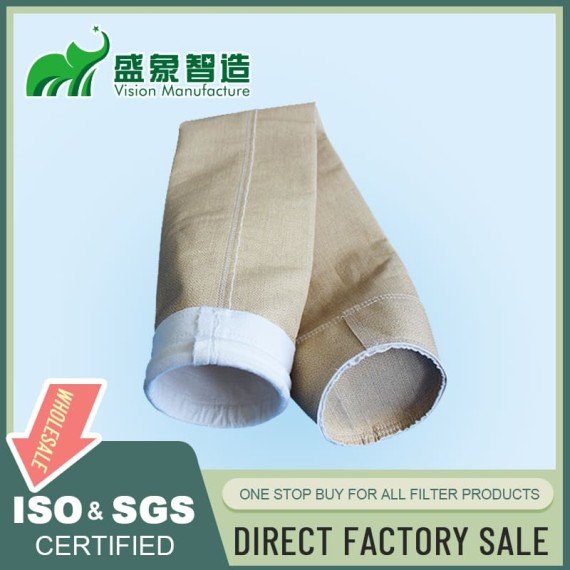
In many industrial environments, managing dust and fine particles is a daily challenge. Factories that process cement or minerals rely heavily on dust collection systems to keep operations clean and safe. One essential part of these systems is the pulse jet filter bag. These bags handle continuous dust filtration without interrupting production, making them vital for modern high-demand facilities.
Industries prefer materials like a Nomex filter bag for added durability in some environments that operate at elevated temperatures. Before selecting the right material or system, it is important to understand what a pulse jet filter bag really is and how it works.
What Is A Pulse Jet Filter Bag?
A pulse jet filter bag is a filtration device that is made of fabric to trap dust suspended in the air of a baghouse dust collector. It serves as the major source of separation between clean air and process air full of dust. With dusty air flowing on the bag, the dust is stuck to the outer shell and pure air flows into the outlet system.
The difference between a pulse jet filter bag and the older style of filtration is the self-cleaning ability. Pulse jet bags clean themselves as the system is being fully used, unlike reverse-air or shaker systems, which require downtime to clean the system. This guarantees maintenance of airflow, low pressure drop, and effective removal of dust over long durations.
The materials used to produce these bags include polyester, polypropylene, acrylic, aramid, PTFE, and blends among other materials. Regardless of the material, pulse jet bags have a uniform structure and function that provides reliability of performance under conditions where there is continuous particulate generation.
How A Pulse Jet Filter Bag Works?
Pulse jet filter bags have a simple but very efficient mechanism that can keep them clean and never halt the system. The air with dust passes through the baghouse, where it is processed by the fabric of the bag and the unwanted particles are left behind. A short jet of compressed air every now and then knocks the dust cake off at the end of the bag, and the bag is left to breathe naturally with a good flow of air.
Step-by-Step Working Process
- Dust-laden air enters the baghouse– Air with dust is drawn into the housing unit by industrial fans, and the filter bags are located vertically.
- Air passes through the filter fabric– Dust rests on the outer part of the bag, with the clean air going through the fabric and out of the system.
- Dust cake slowly builds up– With time, there is a thin and compact layer of dust on the filter surface. This layer enhances filtration, and it hinders airflow resistance.
- Compressed air pulse is activated– When sensors detect increased resistance or according to a timed cycle, a control unit releases a sharp burst of compressed air into the top of the bag.
- Bag expands briefly– The burst of air forces the bag to open and break the connection between the dust and the cloth.
- Dust cake is dislodged– The particles are released straight into the hopper underneath, where they may be picked or emptied.
Conclusion
Pulse jet filter bags have become a staple of the industrial dust collection due to their ability to provide continuous operation, high reliability filtration and low maintenance. They have a self-cleaning mechanism that provides a steady airflow when handling a large amount of dust. To achieve additional durability and safety, the use of a Nomex filter bag can be selected in cases of plants with increased temperature or difficult conditions of particulate.
Understanding how these bags function allows industries to make informed decisions, maintain cleaner facilities, and ensure smoother day-to-day operations.
