
Odisha is one of India’s most historically significant and naturally diverse states and one of its most undervisited. The travelers who discover Odisha beyond the Jagannath Puri circuit, which is itself genuinely extraordinary, find a state with one of the richest concentrations of tribal culture, textile heritage, coastal ecology, and medieval temple architecture anywhere in Asia. Understanding what the Odisha travel experience actually encompasses requires moving past the assumption that Puri is the destination and everything else is supplementary.
The Temple Architecture
The Konark Sun Temple and the Lingaraj Temple in Bhubaneswar represent a specific tradition of Kalinga temple architecture that is distinct from the temple styles found in Rajasthan, Tamil Nadu, or Karnataka. The ornamentation, the spatial arrangement, and the narrative sculpture are characteristic of the Kalinga school, which flourished between the 7th and 13th centuries. A visit to Bhubaneswar’s old town, which contains over 50 surviving temples from this period, gives a sense of the density of architectural heritage concentrated in a small area.
The Tribal Culture and Crafts
Odisha has 62 scheduled tribal groups, representing some of India’s most distinct cultural communities. The Kondh, Bonda, Saura, and Dongria Kondh communities in the southern hill districts maintain distinctive language, dress, craft, and agricultural traditions. According to India’s Ministry of Tribal Affairs, several of these communities are classified as Particularly Vulnerable Tribal Groups, with extremely small populations and fragile cultural continuity. Responsible engagement with tribal communities in Odisha should be arranged through established cultural tourism programs that operate with community consent and ensure that the commercial benefit of tourism reaches the communities themselves.
The Coastal Ecology
Odisha’s coastline includes the Chilika Lake, the largest brackish water lagoon in Asia and a UNESCO Ramsar Convention listed wetland. Chilika supports migratory bird populations from central Asia and Siberia during the winter months, peaking between December and January. The lake also supports one of the largest Irrawaddy dolphin populations accessible to visitors in Asia. A boat program on Chilika during peak migration season, based at Barkul or Rambha, is one of the most distinctive wildlife experiences available in India.
The Bhitarkanika National Park in northern coastal Odisha is among India’s premier saltwater crocodile habitats and a significant nesting ground for Olive Ridley sea turtles. The annual mass nesting event at Gahirmatha Beach, when hundreds of thousands of turtles arrive simultaneously to lay eggs in a phenomenon known as an arribada, is one of the most remarkable wildlife events in Asia. The nesting season runs approximately from November through March.
The Textile Heritage
Odisha’s handloom textile traditions, specifically Sambalpuri and Bomkai weaving and Pipli applique work, represent some of India’s most sophisticated craft production. The ikat weaving of Sambalpuri sarees, which requires the threads to be tie-dyed in pattern before weaving begins, produces designs of remarkable complexity through a process that makes machine replication impractical. A visit to the weaving villages near Sambalpur or Bargarh, where the complete production process from dyeing through weaving is visible, provides a craft encounter that is impossible to replicate in a workshop or emporium setting.
How to Structure an Odisha Itinerary
- Base Bhubaneswar: 2 days. Temples, Pipli village for applique, Udayagiri and Khandagiri caves.
- Puri and Konark corridor: 2 days. Jagannath Puri temple complex, Konark Sun Temple, Chandrabhaga beach.
- Chilika Lake: 1 to 2 days. Stay at Barkul or Rambha, morning and evening boat programs.
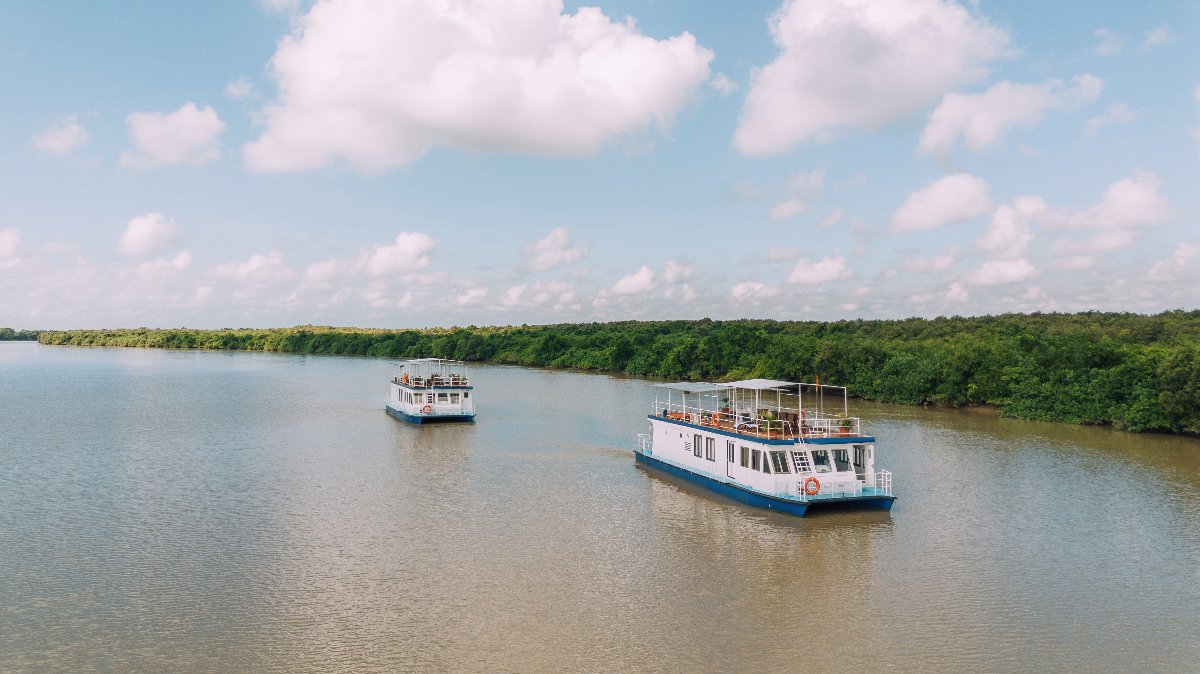
- Bhitarkanika: 2 days. Boat programs through mangrove channels for crocodile and bird observation.
- Sambalpur or tribal south (Koraput district): 2 to 3 days. Craft weaving villages or cultural engagement with tribal communities through an established program.
The Practical Reality
Odisha is well connected by air to Bhubaneswar, and rail connections reach most of the major destinations. The state’s tourism infrastructure has improved significantly over the past decade, and a well-planned Odisha program covering all five zones above is achievable in ten to twelve days. The traveler who returns from Odisha having seen only Puri and Konark has seen two extraordinary places. The traveler who extends the program to include Chilika, Bhitarkanika, and one of the craft regions has encountered something genuinely irreplaceable.
