
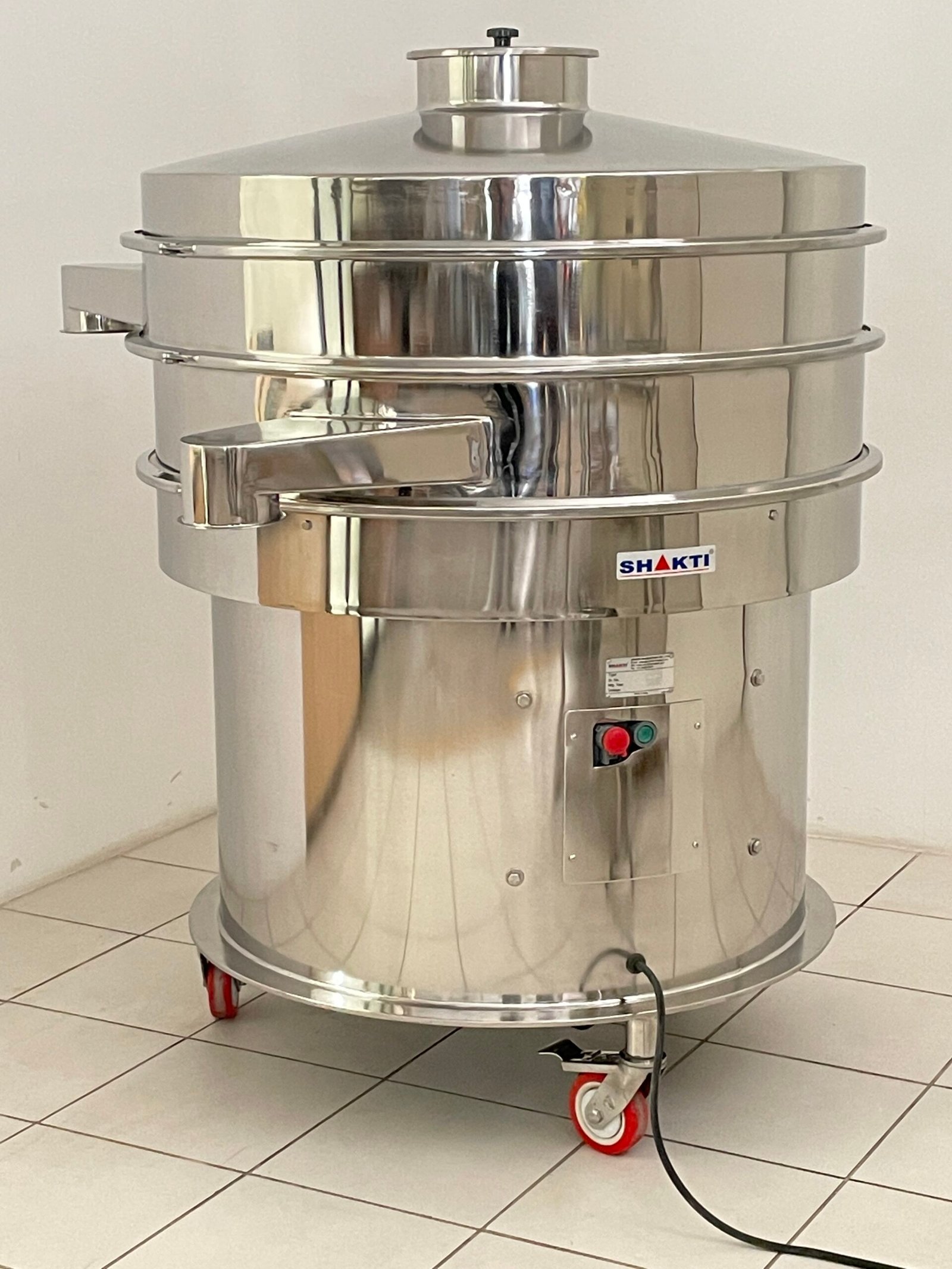
Walk into almost any food processing plant, pharmaceutical facility, or bulk material handling operation running smaller batch sizes, and there’s a decent chance you’ll find a compact vibratory screener tucked into a corner of the production line doing work that’s easy to overlook and hard to replace. A Mini Sifter Vibrator is built for exactly this role: separating, grading, or de-lumping material in operations where a full-size industrial sifter would be overkill, but manual screening or a basic mesh sieve isn’t reliable enough for consistent output.
These compact units have become a standard fixture in operations that need precision screening without the footprint, power draw, or cost of larger separation equipment. Here’s what they actually do well, where they fit into a production line, and what’s worth evaluating before buying one.
What This Equipment Actually Does
At its core, the equipment uses a vibrating motor mounted to a screen deck to create controlled motion that moves material across one or more mesh screens. Particles smaller than the mesh openings pass through; oversized particles, lumps, or foreign material get separated out and discharged separately. The vibration frequency and amplitude can typically be adjusted, which lets an operator fine-tune separation efficiency depending on the material’s particle size, density, and moisture content.
Most compact units run on a single or dual deck configuration, meaning material can be graded into two or three output streams in a single pass: fines, mid-size product, and oversize rejects, for example. Some models include a check screen position above the primary screen specifically to catch foreign contaminants before the main separation happens, which matters a lot in food and pharmaceutical applications where contamination control isn’t optional.
Where These Units Actually Get Used
Food processing is probably the largest application category. Flour, sugar, spice blends, protein powders, and powdered food additives all need consistent particle sizing and contaminant removal before packaging, and batch sizes in artisanal or mid-scale food production often don’t justify a full industrial screening line. A compact unit handles this efficiently without requiring a dedicated room for equipment.
Pharmaceutical and nutraceutical manufacturing relies on this kind of equipment for similar reasons, with an added layer of regulatory pressure. Powder blending, tablet ingredient prep, and capsule filling all depend on consistent particle size distribution, and most pharmaceutical-grade units are built with smooth, crevice-free surfaces and stainless steel construction specifically to meet GMP cleaning and validation standards.
Chemical and cosmetic manufacturing uses these screeners for raw material grading, removing clumps from pigments and powders, and ensuring consistency in products like bath salts, powder cosmetics, and specialty chemical compounds where particle size directly affects product performance.
Recycling and small-scale mineral processing operations use compact vibratory sifters for grading crushed material, separating contaminants from recycled plastics or metals, and processing smaller batches of mined or quarried material where a full-scale screening plant isn’t economically justified.
What Actually Matters When Comparing Units
Screen mesh size and configuration is the first thing worth getting specific about, because it directly determines what particle sizes the unit can actually separate. Mesh sizes are typically specified in microns or mesh count, and most reputable manufacturers offer interchangeable screens so a single unit can be reconfigured for different products without buying new equipment entirely. If a facility processes multiple materials with different particle size requirements, screen interchangeability is worth prioritizing over a marginally cheaper unit with a fixed configuration.
Motor power and vibration frequency need to match the material being processed. Heavier, denser materials generally need more vibratory force to move efficiently across the screen, while lighter powders can clog or compact under excessive vibration. Most quality manufacturers will recommend a configuration based on material specifics rather than selling a one-size-fits-all unit, and it’s worth being skeptical of any supplier who doesn’t ask about the material before recommending a model.
Build material affects both compliance and longevity. Stainless steel construction, specifically 304 or 316 grade depending on the application, is standard for food and pharmaceutical use because it resists corrosion, cleans easily, and doesn’t react with most processed materials. Units intended for non-food industrial use sometimes use mild steel with a coating, which costs less but requires more careful maintenance to avoid corrosion over time.
Throughput capacity is worth checking against actual production volume rather than theoretical maximum, since manufacturer-stated capacity figures often reflect ideal conditions with free-flowing, dry material. Sticky, moist, or fine cohesive powders typically process at meaningfully lower throughput than the spec sheet suggests, so it’s worth asking for capacity figures based on a material similar to what’s actually being processed.
Noise and vibration isolation matters more in facilities with shared workspace or strict workplace noise regulations. Better-built units include rubber or spring-based vibration isolators that reduce both noise output and the vibration transmitted to the surrounding floor or table, which matters both for compliance and for protecting nearby equipment from vibration-related wear.
Ease of cleaning and screen changeover is consistently underweighted by first-time buyers and consistently appreciated by people who’ve used poorly designed units for a year. Quick-release screen clamps, smooth interior surfaces without hard-to-reach crevices, and tool-free disassembly save meaningful labor time in operations that switch between materials regularly or run under strict sanitation schedules.
Common Mistakes Worth Avoiding
Undersizing capacity for future growth is a frequent regret. A unit that exactly matches current production volume leaves no margin if output increases, and most facilities that experience growth end up wishing they’d bought one size up. The cost difference between adjacent capacity tiers is usually smaller than the cost of replacing an undersized unit within two years.
Ignoring material compatibility between the unit’s construction and the substance being processed can cause contamination, corrosion, or product degradation that isn’t obvious until well after installation. Abrasive materials wear standard screens faster than expected, and acidic or corrosive substances can degrade certain steel grades over time even when the manufacturer’s general specifications looked adequate on paper.
Skipping a trial run with actual production material before committing to a purchase is a mistake that’s easy to avoid and surprisingly common. Most reputable manufacturers and distributors will run a sample of the actual material through a demo unit, and that test reveals throughput and separation efficiency far more reliably than spec sheets alone.
Making the Decision
A compact vibratory sifter earns its place in a production line by solving a specific, recurring problem: getting consistent particle separation at a scale where larger equipment doesn’t make economic sense and manual methods don’t provide reliable consistency. Getting the screen configuration, motor sizing, and build material right for the specific application is what separates a piece of equipment that runs reliably for years from one that becomes a maintenance headache within months.
For facilities evaluating their first unit, the most useful step is usually requesting a material trial run with two or three candidate models before making a final decision, since real production material reveals performance characteristics that no specification sheet fully captures.
