
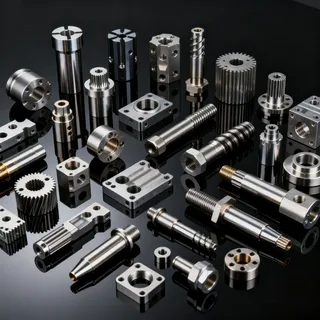
Custom CNC machined parts have become an essential component in modern manufacturing, offering precision, repeatability, and flexibility that traditional machining methods often cannot match. Industries such as automotive, aerospace, medical, electronics, and industrial equipment rely heavily on these components to ensure high performance and durability. Understanding how these parts are designed, produced, and applied can help businesses make better manufacturing decisions.
This article explains everything you need to know about custom CNC machined parts, including their process, benefits, applications, materials, and selection tips.
Understanding Custom CNC Machined Parts
Custom CNC machined parts are components manufactured using Computer Numerical Control (CNC) machines, which are programmed to cut, shape, and form materials with extreme precision. These parts are custom-designed based on specific engineering requirements rather than mass-produced standard components.
The CNC process uses digital design files (CAD/CAM) to guide cutting tools, ensuring accuracy down to microns. This makes it ideal for industries that require tight tolerances and complex geometries.
Key points about custom CNC machined parts:
- Manufactured using automated CNC systems
- Based on CAD/CAM digital designs
- High precision and repeatability
- Suitable for complex geometries
- Used in multiple industrial sectors
Custom CNC machining eliminates many human errors found in manual machining. It also allows manufacturers to produce prototypes and final production parts using the same setup, improving consistency across batches.
Because of its adaptability, CNC machining is widely used for both small-scale custom projects and large-scale industrial production.
CNC Machining Process Explained
The CNC machining process begins with a detailed design created using CAD software. This design is then converted into machine-readable code (G-code), which instructs the CNC machine on how to move, cut, and shape the material.
Once the machine is set up, raw material such as metal, plastic, or composite is loaded, and the machining process begins. The tools operate automatically, following precise instructions to produce the final part.
Key steps in CNC machining process:
- CAD design creation
- Conversion to G-code
- Machine setup and calibration
- Material loading and machining
- Quality inspection and finishing
Each step in the process is carefully controlled to ensure accuracy and consistency. Modern CNC machines can operate on multiple axes, allowing for highly complex shapes to be produced in a single setup.
This automation reduces production time while maintaining superior precision, making CNC machining highly efficient for custom manufacturing needs.
Materials Used in Custom CNC Machining
One of the biggest advantages of custom CNC machined parts is the wide range of materials that can be used. Depending on the application, manufacturers can choose metals, plastics, or composites to meet specific strength, weight, and durability requirements.
Common materials include aluminum, stainless steel, brass, titanium, ABS plastic, and nylon. Each material offers unique benefits in terms of machinability and performance.
Common materials for CNC machined parts:
- Aluminum (lightweight and corrosion-resistant)
- Stainless steel (high strength and durability)
- Titanium (excellent strength-to-weight ratio)
- Brass (good conductivity and machinability)
- Engineering plastics (ABS, Nylon, PEEK)
Material selection plays a critical role in the performance of the final product. For example, aerospace components often use titanium for its strength and low weight, while automotive parts may use aluminum for cost efficiency and durability.
Choosing the right material ensures that the custom CNC machined parts perform effectively under their intended working conditions.
Advantages of Custom CNC Machined Parts
Custom CNC machined parts offer numerous advantages over traditional manufacturing methods. One of the most significant benefits is precision, as CNC machines can produce parts with extremely tight tolerances consistently.
Additionally, CNC machining allows for scalability, meaning the same design can be used for prototypes and mass production without changes in quality.
Key advantages include:
- High precision and accuracy
- Consistent quality across batches
- Faster production times
- Reduced material waste
- Ability to produce complex shapes
Another important advantage is cost efficiency in the long run. Although setup costs may be higher initially, CNC machining reduces labor costs and minimizes errors, leading to overall savings.
This makes custom CNC machined parts an ideal solution for industries requiring reliable and repeatable production.
Applications of Custom CNC Machined Parts
Custom CNC machined parts are used in a wide variety of industries due to their versatility and reliability. From small electronic components to large industrial machinery, CNC machining supports countless applications.
These parts are especially important in industries where precision and durability are critical, such as aerospace, automotive, medical devices, and robotics.
Common applications include:
- Aerospace engine components
- Automotive engine and transmission parts
- Medical surgical instruments
- Industrial machinery components
- Electronics housings and connectors
In the medical field, CNC machined parts are used to create highly precise surgical tools and implants. In aerospace, they are essential for producing lightweight yet strong components that can withstand extreme conditions.
The adaptability of CNC machining ensures that it remains a core manufacturing technology across many industries.
Conclusion
Custom CNC machined parts play a vital role in modern manufacturing by offering unmatched precision, flexibility, and efficiency. From design to production, CNC machining ensures that every component meets strict quality standards and performs reliably in real-world applications.
As industries continue to demand higher accuracy and faster production times, the importance of CNC machining will only increase. Whether for prototyping or large-scale production, custom CNC machined parts provide a dependable solution for a wide range of engineering needs.
By understanding the materials, processes, and applications involved, businesses can make smarter decisions and fully leverage the benefits of CNC technology in their operations.
