
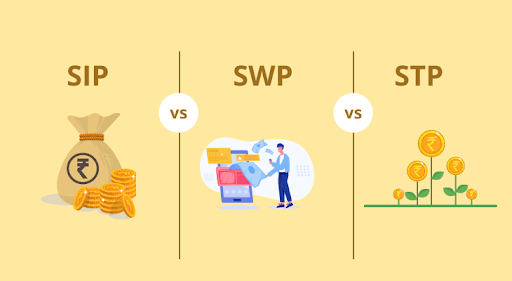
Investment strategies are often designed to match specific financial goals such as income generation, capital preservation, or long-term growth. One such strategy used in mutual funds is the systematic withdrawal plan, commonly referred to as SWP. When investors set up a systematic withdrawal plan, the type of mutual fund chosen can influence how the withdrawals interact with the fund’s performance. Understanding the relationship between SWP strategies and different types of mutual funds helps explain how this investment approach functions in financial planning.
Understanding a systematic withdrawal plan
A systematic withdrawal plan is a facility that allows investors to withdraw a fixed amount of money from their mutual fund investment at regular intervals.
Instead of redeeming the entire investment at once, the investor withdraws smaller amounts periodically. These withdrawals may occur monthly, quarterly, or at other specified intervals.
Each withdrawal involves redeeming a certain number of mutual fund units based on the prevailing net asset value (NAV) of the fund.
The remaining units continue to remain invested in the mutual fund, allowing the portfolio to participate in market movements over time.
How SWP works in mutual funds
When a systematic withdrawal plan is activated, the investor specifies the withdrawal amount and frequency. At each withdrawal date, units are redeemed from the mutual fund portfolio to generate the required amount.
The number of units redeemed depends on the current NAV.
For example:
- If the NAV is higher, fewer units may need to be redeemed
- If the NAV is lower, more units may be redeemed to generate the same withdrawal amount
This mechanism allows the remaining investment to stay invested in the fund while providing periodic withdrawals.
Because of this structure, the choice among different types of mutual funds may influence how the investment behaves over time.
Types of mutual funds available for SWP
There are several types of mutual funds available in financial markets. Each category has distinct characteristics that affect risk, volatility, and return patterns.
The main categories include:
- Equity mutual funds
- Debt mutual funds
- Hybrid mutual funds
- Liquid and money market funds
Each of these types of mutual funds invests in different financial instruments and therefore behaves differently during changing market conditions.
When a systematic withdrawal plan is set up, these differences may influence how the portfolio evolves while withdrawals are taking place.
Equity mutual funds and SWP
Equity mutual funds invest primarily in shares of companies listed on stock exchanges. These funds often aim to capture long-term growth potential in equity markets.
Because equity markets can experience short-term volatility, the value of equity funds may fluctuate over shorter time periods.
When a systematic withdrawal plan is used with equity funds, the NAV movements may influence how many units are redeemed during each withdrawal.
Equity funds are therefore often associated with market-linked performance patterns when used in SWP strategies.
Debt mutual funds and SWP
Debt mutual funds invest mainly in fixed-income securities such as government bonds, treasury bills, and corporate bonds.
These funds generally exhibit relatively lower volatility compared with equity funds because their returns are primarily linked to interest income from underlying securities.
Some investors use debt-oriented types of mutual funds in SWP strategies due to their comparatively stable NAV movements.
However, debt funds may still experience fluctuations based on interest rate changes and credit conditions in financial markets.
Hybrid mutual funds and SWP
Hybrid funds combine both equity and debt investments within the same portfolio.
Because hybrid funds allocate capital across multiple asset classes, they may exhibit characteristics of both equity and debt investments.
The allocation between asset classes varies depending on the strategy of the fund.
When used in a systematic withdrawal plan, hybrid funds provide exposure to multiple markets while withdrawals continue over time.
These funds therefore represent another category among the different types of mutual funds used in investment strategies.
Importance of NAV movements in SWP
Net asset value plays an important role in determining how a systematic withdrawal plan functions.
Since withdrawals involve redeeming units, the NAV at the time of redemption determines how many units must be sold to generate the withdrawal amount.
For example:
- If the NAV rises, fewer units are required for the withdrawal
- If the NAV declines, more units must be redeemed
Because NAV movements vary across different types of mutual funds, the selection of the fund category may influence the long-term behaviour of the investment during the withdrawal period.
Role of investment duration in SWP planning
Investment duration is another factor that influences SWP strategies.
Longer investment durations allow the remaining portfolio to remain invested for extended periods while periodic withdrawals occur.
During this time, the performance of the mutual fund portfolio continues to influence the NAV and therefore the number of units redeemed.
Because different types of mutual funds respond differently to economic cycles, the duration of the SWP strategy interacts with the characteristics of the chosen fund.
Investors exploring SWP options through platforms like Bajaj Finance can benefit from aligning their investment duration with the right fund category to optimise long-term withdrawal outcomes.
Monitoring SWP investments
Even though a systematic withdrawal plan is designed as a structured withdrawal method, monitoring the investment remains important.
Investors often review factors such as:
- Changes in NAV over time
- Portfolio allocation across asset classes
- Market conditions affecting the underlying securities
Regular monitoring helps ensure that the chosen mutual fund category continues to align with the objectives of the SWP strategy.
This review process is particularly relevant because different types of mutual funds may respond differently to market developments.
Conclusion
A systematic withdrawal plan allows investors to receive periodic withdrawals from their mutual fund investments while the remaining capital continues to stay invested.
The number of units redeemed during each withdrawal depends on the prevailing NAV of the mutual fund. Because NAV movements vary across different categories, the choice among various types of mutual funds plays an important role in how the SWP strategy evolves over time.
Equity funds, debt funds, and hybrid funds each demonstrate different performance patterns in financial markets. These differences influence how investments behave during the withdrawal period.
Understanding the characteristics of different types of mutual funds helps explain why selecting the appropriate fund category matters when establishing a systematic withdrawal plan.
